
Men's health
Staying strong after 40
Why muscle declines with age and a simple strength routine that protects mobility and energy.
You used to carry the shopping in one trip without thinking about it. Now you notice the weight. Getting up off the floor after playing with the kids takes a bit more effort. Your back complains when you lift something awkward.
It's easy to put this down to "getting older" and accept it. But much of what we think of as ageing is actually a gradual loss of muscle, and that's something you can do a lot about.
What happens to muscle
From around our thirties, most people start to lose muscle mass and strength. The rate varies, but it's commonly estimated at somewhere between 3 and 8% per decade, speeding up after 60. The medical term for significant age-related muscle loss is sarcopenia.
For men, falling testosterone plays a part. Levels tend to drop by around 1% a year from the age of 30 or 40. But the biggest factor for most people is simply using their muscles less. Less physical work, more sitting and less sport all mean the body has less reason to hold on to muscle.
Why it matters
Muscle isn't just about looking fit. It helps you:
- stay mobile and independent as you get older
- protect your joints and back
- keep your bones strong
- manage your weight, because muscle uses more energy than fat
- control blood sugar, lowering your risk of type 2 diabetes
- reduce your risk of falls and fractures later in life
The UK Chief Medical Officers recommend that adults do muscle-strengthening activities on at least two days a week. Most men don't.
It's never too late
Muscles respond to training at any age. Studies have shown that even people in their eighties and nineties can build strength with a well-designed programme. You don't need a gym membership or heavy weights to start.
A simple routine
Do this two or three times a week, with at least one rest day between sessions. Start with one set of each and build to two or three sets as you get stronger.
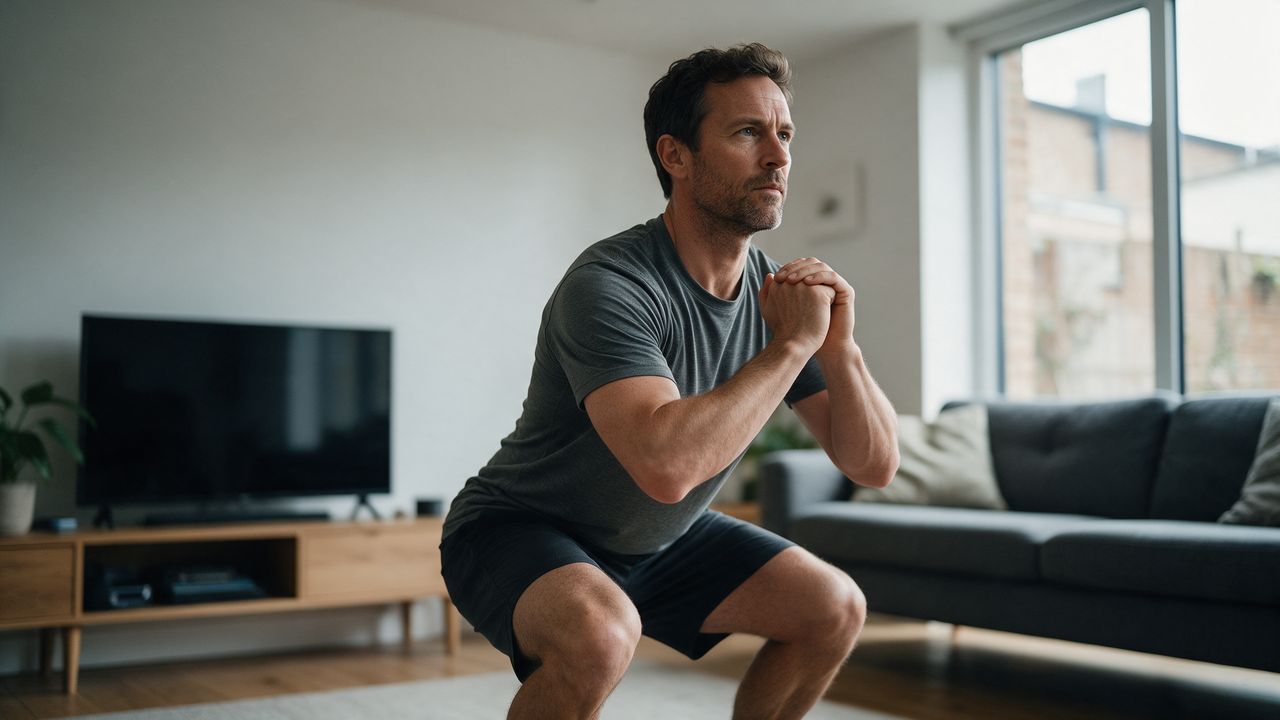
- Squats. Stand with your feet shoulder-width apart and lower yourself as if sitting into a chair, then stand back up. Use a chair behind you to start with. 10 to 15 repetitions.
- Press-ups. Start against a wall or a kitchen worktop, and progress to the floor over time. 8 to 12 repetitions.
- Rows. Using a resistance band looped round something sturdy, or a full water bottle in each hand while leaning forward, pull your elbows back. 10 to 12 repetitions.
- Hip hinges. With soft knees, push your hips back and lean forward with a straight back, then stand up tall by squeezing your buttocks. 10 to 12 repetitions.
- Plank. Hold a straight line from head to heels on your forearms and toes, or knees to start with. Build up to 30 seconds.
- Carries. Hold a heavy bag or shopping in each hand and walk tall for 30 to 60 seconds.
Choose a level of effort where the last couple of repetitions feel hard but you can still keep good form. As it gets easier, make it harder: more repetitions, slower movements, or heavier weights.
If you have a heart condition, joint problems or other health issues, check with your GP or a physiotherapist before starting.
Eat enough protein
Muscle needs protein to grow and repair. Older adults often eat less than they need. Try to include some protein at every meal, such as eggs, dairy, fish, meat, beans, lentils or tofu, rather than saving it all for dinner.
Start small, and celebrate
Stanford behaviour scientist BJ Fogg has found that the best way to build a new habit is to start very small and attach it to something you already do: "After I ___, I will ___". For example: "After I switch the kettle on in the morning, I'll do five squats."
Fogg also recommends celebrating each small success with a quick moment of satisfaction, a "nice one" or a fist pump. It might feel daft, but it helps the brain link the habit with something positive, which makes you more likely to keep it up.
This week
Do the routine twice this week, just one set of each exercise. Make a note of how many repetitions you managed, so you can see your progress over the coming weeks.
Where to get support Speak to your GP before starting a new exercise programme if you have a long-term health condition, or if you get chest pain, dizziness or unusual breathlessness when active. A physiotherapist can help if you have joint or back problems.