
Men's health
Making friends as a man, beyond the pub
Research on men's shrinking social circles, and low-pressure ways to build friendships, such as shoulder-to-shoulder activities.
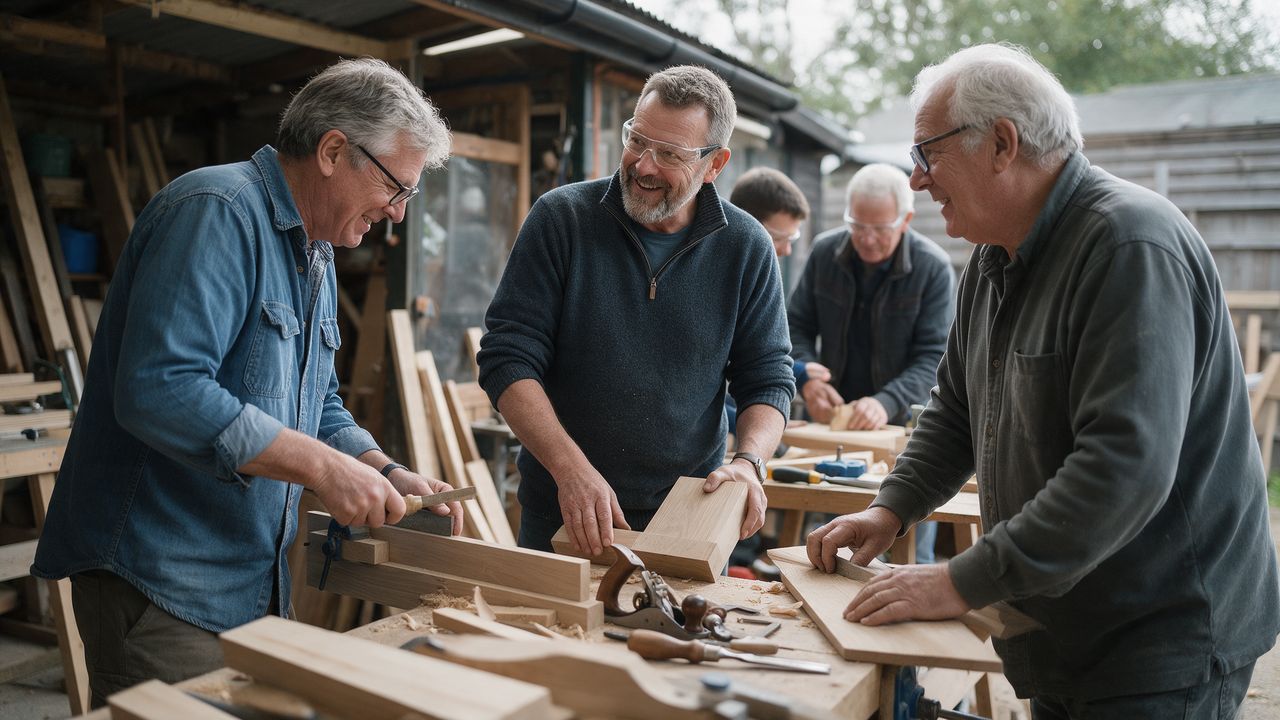
In your twenties, you had a big group of mates. Five-a-side on Thursdays, the pub on Fridays, someone's stag do every other month. Then came careers, relationships, kids and moving house. Now, if you're honest, you're not sure who you'd call if things went badly wrong.
Lots of men find themselves here. It rarely happens because of a falling-out. It just happens, slowly, as life fills up.
Men's friendships are shrinking
Much of the clearest data comes from the US. A 2021 survey by the Survey Center on American Life found that 15% of American men said they had no close friends, up from 3% in 1990. Similar concerns have been raised in the UK, where surveys by men's health charities have found that many men say they have no one they could turn to in a crisis.
It matters. Yale psychologist Laurie Santos often highlights research showing that social connection is one of the strongest predictors of happiness, and loneliness is linked with poorer physical and mental health.
Why it's harder for men
Men often bond through activities. Many male friendships are built around doing something together, such as football, work or the pub. When those activities stop, the friendships can fade with them.
Partners often become the main social organiser. In many couples, one partner, often a woman, keeps track of birthdays, arranges plans and maintains friendships. Men can find their social life has quietly become their partner's social life.
Fear of seeming needy. Many men worry that reaching out will come across as desperate or odd. So nobody makes the first move.
We underestimate how welcome we are
Santos often points out that we're poor at predicting how social situations will go. Research on what's been called the "liking gap" has found that after conversations with new people, we consistently underestimate how much they liked us. The mate you haven't messaged in two years is probably more pleased to hear from you than you'd imagine.
Side by side
Back in the 1980s, psychologist Paul Wright described male friendships as often "side by side", built around shared activities, while female friendships were more often "face to face", built around conversation. That's a generalisation, and plenty of men love a long chat. But it's a useful insight. Many men find it easier to open up while doing something together.
That's partly why Men's Sheds have spread across the UK. They're community workshops where men meet to make, mend and build things, and they've become an important source of friendship for many, particularly older men and those who have retired.
Ideas that don't revolve around drinking
- walking football, five-a-side or a local running club
- a Men's Shed or a community workshop
- volunteering, from coaching kids' football to conservation work
- a cycling club or walking group
- learning something new, like cooking, climbing, an instrument or a language
- a regular fishing trip, golf round or gym session with a mate
- a book group, quiz team or board game night
- a peer support group, such as Andy's Man Club, if you're going through a tough time
Making it happen
Choose something that repeats. Friendships grow from seeing the same people regularly, not one-off events.
Be the one who organises. Suggest a date and a place. "Fancy a walk on Saturday morning?" is easier to say yes to than "We should catch up sometime."
Reconnect with old mates. You've already got history. A message like "Saw this and thought of you. How are things?" is enough.
Go a bit deeper. You don't need to pour your heart out, but asking "How are you really doing?" and sharing something real yourself helps friendships move beyond banter.
I am because we are
The Southern African idea of ubuntu, "I am because we are", sees our lives as bound up with the people around us. Friendship is a basic part of being well, for men as much as anyone.
This week
Message two mates you haven't seen in a while and suggest a specific plan, with a date. And look up one regular activity near you that you could try.
Where to get support If you're feeling low or isolated, CALM offers free support on 0800 58 58 58, 5pm to midnight every day. Andy's Man Club runs free peer support groups for men across the UK. The UK Men's Sheds Association can help you find a shed near you. Samaritans are available free on 116 123, any time.