
Women's health
Looking after yourself at work during pregnancy
Energy, nutrition, movement and workplace rights during pregnancy.
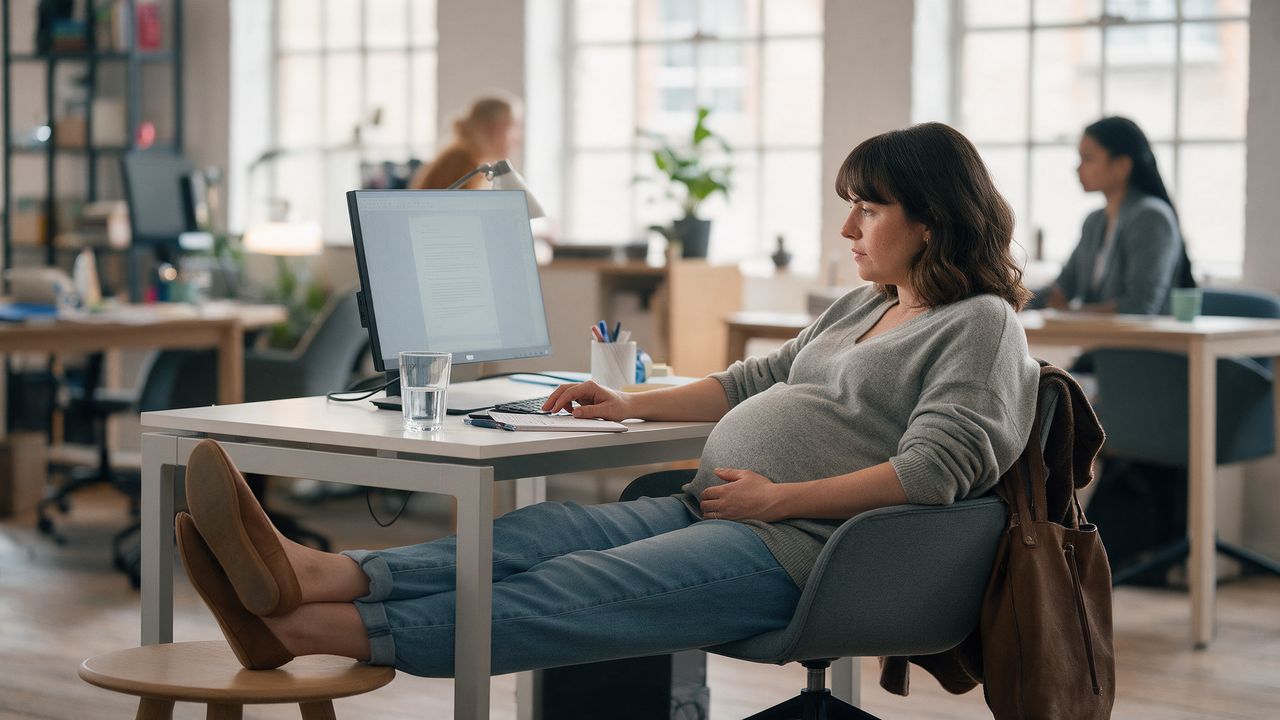
You've not told anyone yet, but you're twelve weeks pregnant, exhausted by 2pm, and you've just had to leave a meeting to be sick. Later on, it's backache, swollen ankles and a growing bump that makes your desk chair feel like it was designed for someone else.
Pregnancy changes how you feel at work, sometimes week to week. Here's how to look after yourself, and what you're entitled to.
This article is general information. Your midwife and GP are the best people to advise on your own pregnancy.
Energy
Tiredness is very common, especially in the first and last three months. Hormonal changes, poor sleep, nausea and the sheer effort of growing a baby all play a part.
- Rest when you can, including short breaks during the working day.
- Eat small, regular meals and snacks to keep your energy steady.
- Prioritise sleep. Sleep scientist Matthew Walker describes sleep as the foundation of health, and in pregnancy that's especially true. Go to bed earlier if you need to.
- From 28 weeks, the NHS advises going to sleep on your side rather than your back.
- Ask for help with heavy or tiring tasks.
Nausea
Morning sickness can happen at any time of day. Eating little and often, keeping plain snacks like crackers at your desk and avoiding strong smells can help. If you can't keep food or fluids down, speak to your midwife or GP urgently, as this may be a more serious condition called hyperemesis gravidarum.
Food and supplements
The NHS advises taking:
- folic acid, 400 micrograms a day, ideally from before you conceive until 12 weeks of pregnancy
- vitamin D, 10 micrograms a day throughout pregnancy
It also advises limiting caffeine to 200mg a day (about two mugs of instant coffee) and avoiding alcohol altogether, as no amount is known to be safe in pregnancy. Your midwife can give you a full list of foods to avoid.
Staying active
Unless your midwife or doctor has told you otherwise, keeping active in pregnancy is good for you and your baby. The UK Chief Medical Officers recommend aiming for 150 minutes of moderate activity a week, such as brisk walking or swimming, plus some strength exercises. If you weren't active before, start gently.
At work, avoid sitting or standing still for long periods. Get up and move regularly, and try gentle stretches for your back and legs.
Your rights at work
In the UK, you have legal rights during pregnancy. These include:
- Paid time off for antenatal care. This includes appointments with your midwife or doctor, and antenatal classes if recommended.
- A risk assessment. Once you've told your employer in writing that you're pregnant, they must assess any risks to you and your baby and make changes, such as adjusting your hours or duties, if needed.
- Somewhere to rest. Employers must provide a suitable place for pregnant and breastfeeding workers to rest, and lie down if necessary.
- Protection from discrimination. It's against the law to treat you unfairly because you're pregnant.
You need to tell your employer you're pregnant at least 15 weeks before your baby is due to qualify for maternity leave, but you can tell them earlier. Telling them sooner means they have to carry out a risk assessment and you're protected from that point.
Small habits that help
Stanford behaviour scientist BJ Fogg suggests attaching small habits to things you already do: "After I ___, I will ___". For example: "After I take my folic acid in the morning, I'll fill my water bottle." "After each meeting, I'll stand up and stretch."
This week
Make a list of what would make your working day easier, like a different chair, more breaks, a later start or less travel. Then raise it with your manager or HR. Many adjustments are simple, and you're entitled to ask.
Where to get support Speak to your midwife or GP about any health concerns. Maternity Action offers free advice on your rights at work, and ACAS can help with workplace issues. Contact your maternity unit or call 999 urgently for heavy bleeding, severe pain, reduced baby movements or signs of pre-eclampsia, such as a severe headache, problems with your vision or sudden swelling.