
Energy, sleep and recovery
Eating well when your shifts are long or irregular
Meal timing and snack strategies for nurses, drivers and other shift workers.
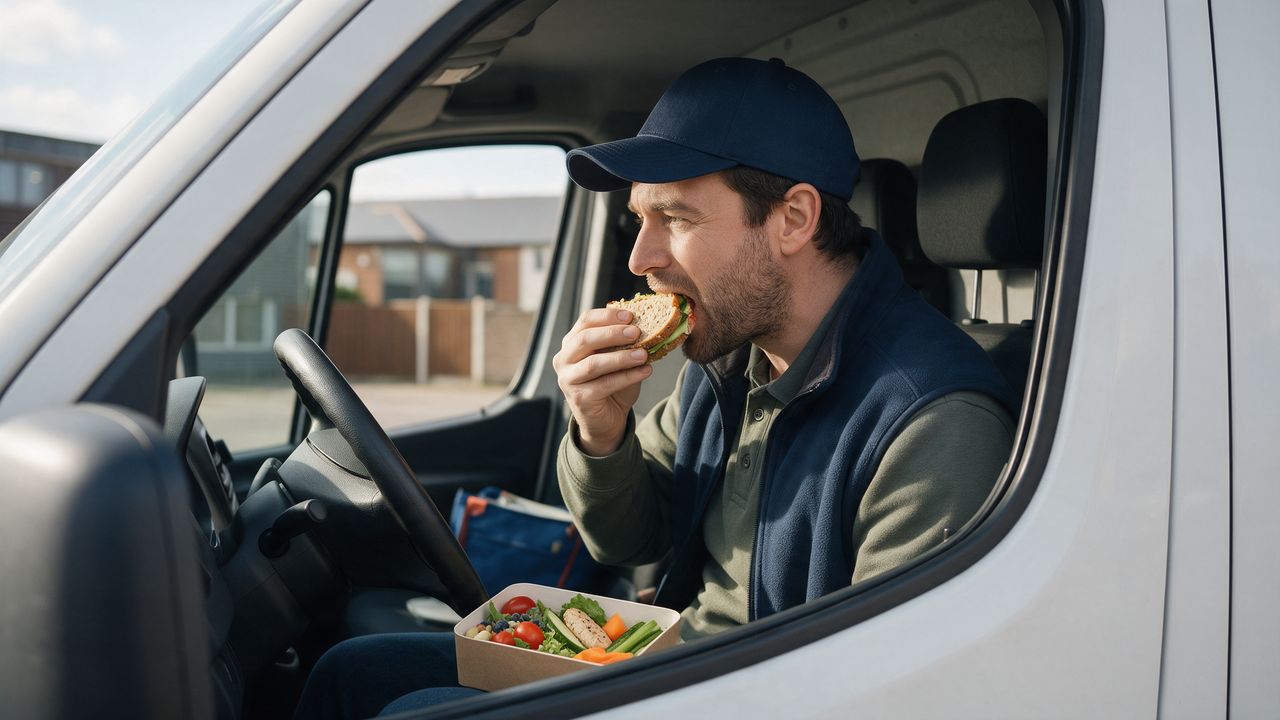
At 4am on a night shift, the vending machine is the only thing open. You've been on your feet for eight hours, you're starving, and a chocolate bar and a can of something fizzy feel like the only option. Two hours later you feel worse than before.
If you work long or irregular hours, as a nurse, carer, driver, warehouse worker, police officer or anyone else on shifts, eating well is harder. Here's how to make it easier.
Why timing matters
The body has an internal clock that runs on a roughly 24-hour cycle. It doesn't only control sleep. It also affects digestion and how the body handles food. At night, digestion slows down and the body becomes less efficient at processing sugar and fat.
That's why large meals in the small hours often leave people feeling heavy, bloated or sluggish. Research has also linked long-term night work with a higher risk of weight gain and type 2 diabetes, so it's worth taking care.
Sleep scientist Matthew Walker, at the University of California, Berkeley, has shown that short sleep also affects appetite. When we're tired, levels of the hormone that makes us feel hungry go up and the one that makes us feel full goes down. So a tired brain on a night shift really is pushing you towards the vending machine.
A rough pattern for night shifts
Everyone's rota is different, but many shift workers find a pattern like this helps:
- Before your shift: have your main meal, ideally in the late afternoon or early evening. Think of it as your "dinner".
- During the first half of the shift: a lighter meal or substantial snack, such as soup, a wrap or leftovers.
- Between midnight and 6am: small, light snacks if you're hungry. Fruit, yoghurt, a handful of nuts, crackers with cheese, or vegetable sticks with hummus.
- After your shift: a light breakfast before you sleep, like toast, cereal or porridge, so hunger doesn't wake you, but nothing so heavy that it stops you sleeping.
Plan it before you go
The biggest difference often comes from deciding in advance. Psychologist Peter Gollwitzer's research on "when and where" plans found that people who decide exactly when and where they'll do something are much more likely to follow through. Habit researcher Wendy Wood has found similar: routines tied to a consistent time and place become automatic.
So rather than "I'll eat better on nights", try "Before each night shift, I'll pack two snacks and a meal while my dinner is cooking."
Packing tips
- Cook extra the day before and take leftovers.
- Use a cool bag and ice pack so food stays fresh through a long shift.
- Keep a supply of long-life snacks in your locker or car, like oatcakes, nuts, dried fruit and tins of soup.
- Take a flask of soup or a hot drink for cold nights.
- Fill a large water bottle at the start of each shift.
Drinks and caffeine
Dehydration is common on long shifts and can make tiredness worse. Keep water with you and sip through the shift.
Caffeine can help with alertness, but try to have your last caffeinated drink in roughly the first half of a night shift, so it's mostly worn off by the time you need to sleep. Energy drinks are often high in sugar and caffeine, so they can lead to a sharp crash later.
On days off
It can help to return to a normal pattern of breakfast, lunch and dinner on your days off, as this helps your body clock reset. Batch-cooking on a day off also makes the next run of shifts much easier.
Start with your next shift
Before your next long or night shift, pack one proper meal and two healthy snacks, plus a full water bottle. Notice how you feel at 4am compared with usual.
Where to get support If you have a health condition such as diabetes, speak to your GP or practice nurse about managing meals around shift work. Your employer's occupational health service may also be able to help.