
Energy, sleep and recovery
Do you really need eight glasses of water a day?
Myths and facts about hydration, the signs of mild dehydration and simple ways to drink more.
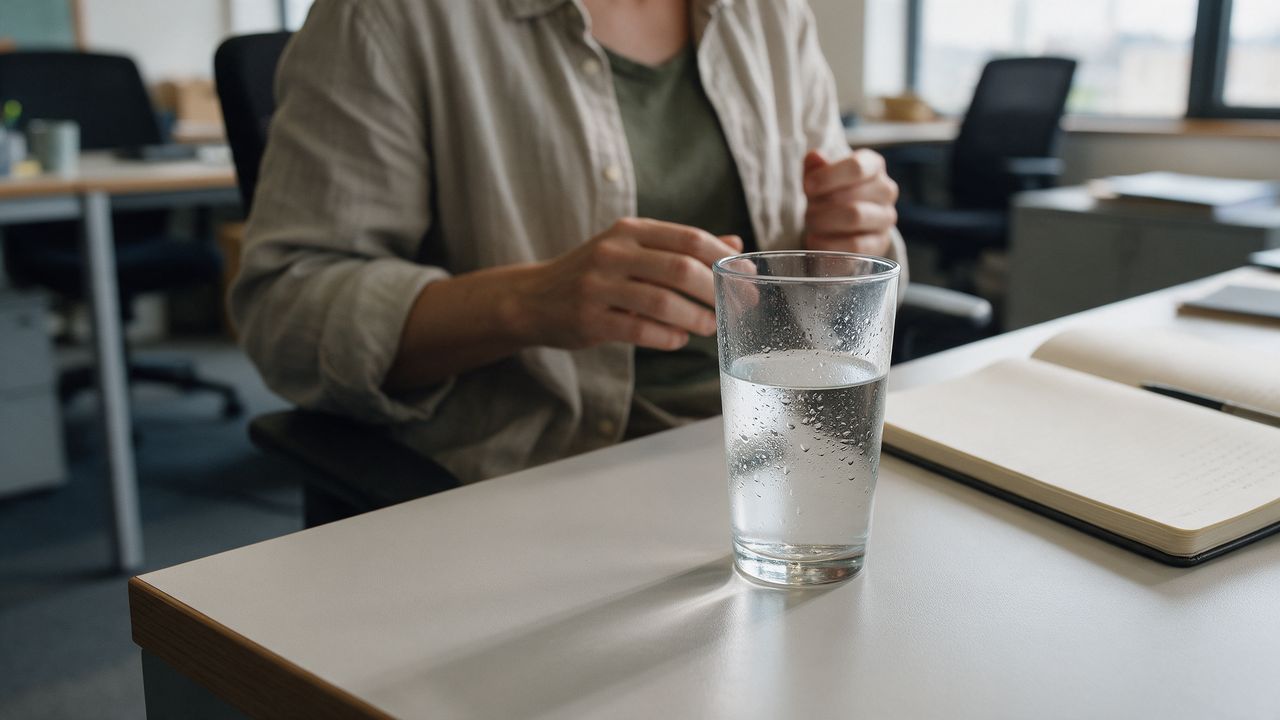
Few health rules are repeated as often as "drink eight glasses of water a day". It's on posters in offices, on the sides of water bottles and in countless wellness posts. Some people carry two-litre bottles with motivational slogans printed down the side.
So where does the rule come from, and is it right?
Where the idea started
The origin is often traced to 1945, when the US Food and Nutrition Board suggested that adults needed about 2.5 litres of water a day. The very next sentence, which tends to get forgotten, said that most of this is already contained in food. Over the years, the "2.5 litres" survived and the bit about food didn't.
What UK guidance says
The NHS Eatwell Guide recommends 6 to 8 glasses of fluid a day, which is roughly 1.2 to 1.6 litres. Crucially, that's fluid, not just water. Milk, sugar-free drinks, and tea and coffee all count.
On top of that, around a fifth of the water we take in usually comes from food, especially fruit, vegetables, soups and yoghurt.
Myth: tea and coffee dehydrate you
This one is widely believed but largely untrue. Caffeine does have a mild diuretic effect, meaning it makes you need the loo a bit more, but the water in the drink more than makes up for it. A 2014 study at the University of Birmingham found that moderate coffee drinking hydrated people about as well as the same amount of water.
So your morning cuppa counts. Just keep an eye on how much caffeine you're having overall, and on how late in the day.
Myth: by the time you're thirsty, it's too late
For most healthy adults, thirst is a reliable signal. You don't need to drink constantly to stay ahead of it. There are exceptions, though. Older adults often feel less thirsty even when they need fluid, and people who are exercising hard or working in heat need more.
Fact: mild dehydration affects how you feel
Even mild dehydration, losing as little as 1 to 2% of your body's water, has been linked in studies to headaches, tiredness, low mood and poorer concentration. That's one reason a glass of water is a good first move when you're flagging in the afternoon.
How to tell if you're drinking enough
The simplest check is the colour of your urine. Pale straw-coloured is a good sign. Darker yellow suggests you need to drink more. Other signs of not drinking enough include headaches, feeling light-headed, a dry mouth and passing urine less often than usual.
You'll need more fluid in hot weather, when you're active, if you're unwell with a temperature, vomiting or diarrhoea, and if you're pregnant or breastfeeding.
Easy ways to drink a bit more
Stanford behaviour scientist BJ Fogg recommends anchoring small habits to things you already do: "After I ___, I will ___". For drinking, that might be:
- After I brush my teeth in the morning, I'll drink a glass of water.
- After I sit down at my desk, I'll fill my water bottle.
- After I finish a meeting, I'll have a few sips.
Habit researcher Wendy Wood has found that habits form most easily in a stable context. Keeping the same bottle in the same place, like on your desk or by the kettle, turns it into a reminder you don't have to think about.
Other ideas: add a slice of lemon, cucumber or a few berries if plain water is boring; eat more water-rich foods; and keep a glass by the bed.
The bottom line
You don't need to force down two litres of plain water a day. Aim for around six to eight glasses of fluid, let tea, coffee and food count towards it, check the colour of your urine, and drink more when it's hot or you're active.
Try it today
Choose one anchor from the list above and pair it with a glass of water. Keep it up for a week and notice whether the afternoon headaches or flat moments change.
Where to get support If you're constantly thirsty, even after drinking plenty, or you're passing urine much more often than usual, speak to your GP. These can be signs of conditions such as diabetes.