
Men's health
Do you know your heart numbers?
Explains the key heart-health numbers, why men's risk starts earlier and what to change.
Most men know their car's mileage, their bank balance and their team's position in the league. Far fewer know their blood pressure or cholesterol level.
That matters, because high blood pressure and high cholesterol usually cause no symptoms at all. You can feel completely well while they quietly increase your risk of a heart attack or stroke. Men also tend to develop heart disease several years earlier than women.
The good news is that these numbers are easy to check, and in most cases they can be improved.
This article is general information, not medical advice. Your GP can tell you what your numbers mean for you.
Blood pressure
Blood pressure is the force of blood pushing against the walls of your arteries. It's written as two numbers, for example 120/80. The first is the pressure when your heart beats. The second is the pressure when it rests between beats.
- Ideal: between 90/60 and 120/80
- Raised: between 120/80 and 140/90, a sign to make some changes
- High: 140/90 or above when measured at a clinic (135/85 or above when measured at home)
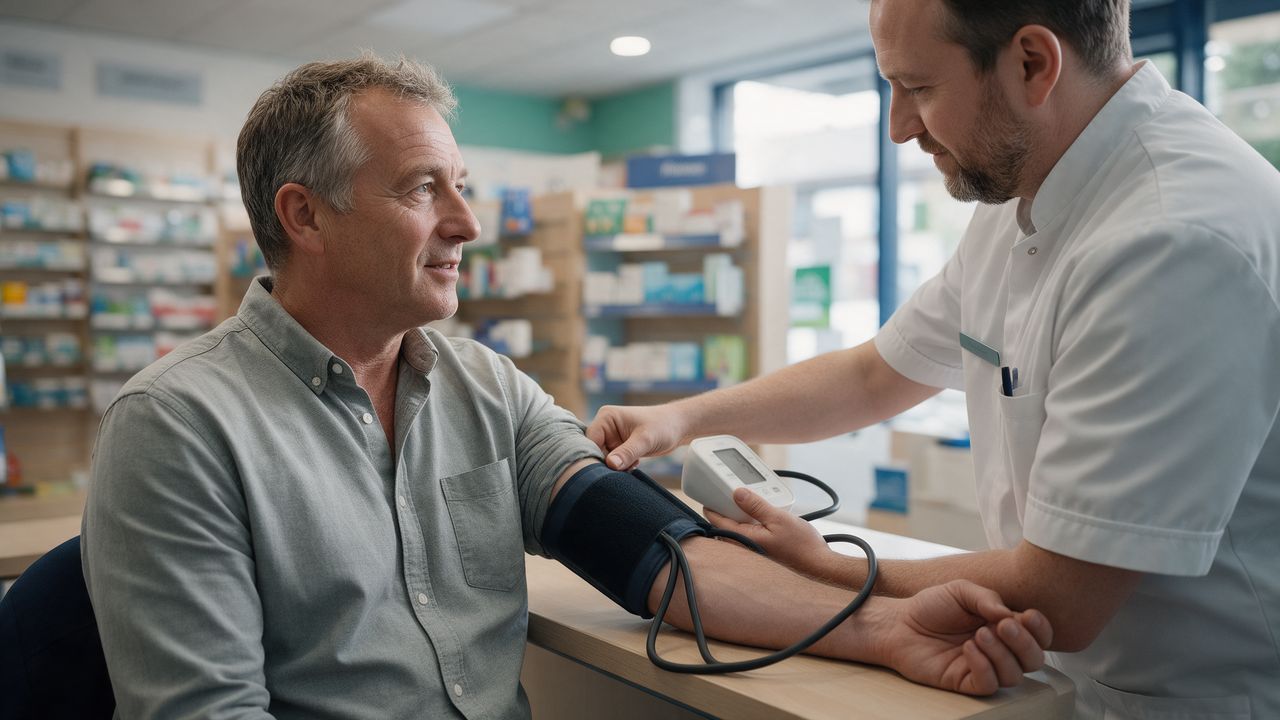
High blood pressure is sometimes called a silent killer because so many people have it without knowing. In England, if you're over 40, many pharmacies will check your blood pressure for free.
Cholesterol
Cholesterol is a fatty substance in the blood. Some is essential, but too much of the wrong kind can build up in your arteries.
The NHS suggests these as general targets for healthy adults:
- total cholesterol: 5mmol/L or below
- non-HDL ("bad") cholesterol: 4mmol/L or below
- HDL ("good") cholesterol: 1mmol/L or above for men
You'll need a blood test to find out your levels. If you're 40 to 74 in England, it's included in the free NHS Health Check.
Blood sugar
High blood sugar is a sign of type 2 diabetes or prediabetes, both of which increase your risk of heart disease. It's usually checked with a blood test called HbA1c.
- normal: below 42mmol/mol
- prediabetes: 42 to 47mmol/mol
- diabetes: 48mmol/mol or above
Waist size
Carrying weight around your middle is a particular risk for heart disease and diabetes. To measure, find the point halfway between the bottom of your ribs and the top of your hips, and measure round, breathing out naturally.
For men, a waist of 94cm (37 inches) or more means an increased risk. For men of South Asian heritage, the threshold is lower, at around 90cm (35 inches).
Knowing isn't enough
Yale psychologist Laurie Santos often points out that knowing what's good for us doesn't change our behaviour on its own. Plenty of people know their blood pressure is high and do nothing about it. The numbers only help if they lead to action.
Small changes that move the numbers
- Move more. Regular activity lowers blood pressure, improves cholesterol and helps with blood sugar.
- Eat less salt. Most of it is hidden in bread, processed meat, ready meals and sauces. Check labels.
- Eat more fibre, from oats, beans, wholegrains, fruit and vegetables.
- Cut back on alcohol. Drinking more than 14 units a week raises blood pressure.
- Stop smoking. It's the single biggest thing many men can do for their heart.
- Take prescribed medicines. If your GP prescribes something for blood pressure or cholesterol, keep taking it even when you feel fine.
Stanford behaviour scientist BJ Fogg suggests starting with tiny changes anchored to things you already do, using the formula "After I ___, I will ___". "After I park at work, I'll take the long way to the door." "After I make my lunch, I'll add a portion of veg."
This week
Find out one of your numbers. Get your blood pressure checked at a pharmacy, or book an NHS Health Check if you're eligible. Write the result down, and ask what it means.
Where to get support Speak to your GP or pharmacist about your blood pressure, cholesterol or blood sugar. The British Heart Foundation has reliable information and a helpline on 0808 802 1234. Call 999 for chest pain, sudden breathlessness or signs of a stroke.