
Energy, sleep and recovery
A 10-minute morning routine to get you moving
A simple sequence of mobility, light cardio and stretches to raise alertness.
The alarm goes. You reach for your phone, scroll through messages while still lying down, then shuffle to the kettle feeling stiff, slow and not quite awake.
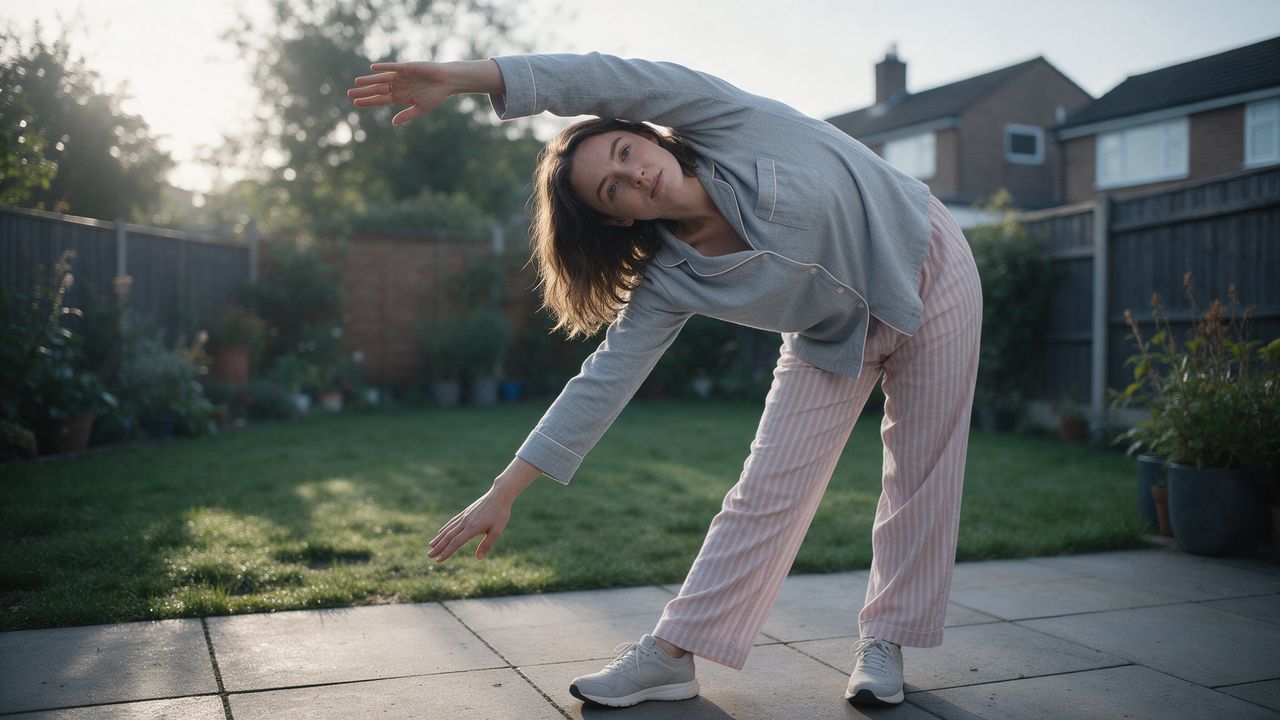
A few minutes of movement first thing can change how the rest of the morning feels. It gets the blood flowing, loosens stiff joints, and tells your body clock that the day has started. This routine takes ten minutes, needs no equipment and can be done in pyjamas.
Before you start
Move at a comfortable pace and stay within a pain-free range. Mornings are when muscles and joints tend to be stiffest, so start gently and let the movements get bigger as you warm up. If you have a health condition, an injury or haven't been active for a while, check with your GP or a physiotherapist first.
If you can, do it by an open window, on a balcony or in the garden. Morning daylight is one of the strongest signals to your body clock that it's time to be awake.
Minutes 1 to 3: wake up the joints
Neck. Slowly turn your head to look over your right shoulder, then your left. Repeat five times each side. Then tilt your ear gently towards each shoulder, five times.
Shoulders. Roll your shoulders backwards ten times, then forwards ten times.
Spine. Stand with your feet hip-width apart. Gently twist your upper body to the right, then the left, letting your arms swing loosely. Repeat ten times.
Hips. With your hands on your hips, make slow circles with your hips, five times each way.
Ankles. Lift one foot slightly off the floor and circle the ankle five times each way. Hold onto a wall or chair if you need to. Swap feet.
Minutes 4 to 6: get the heart going
March on the spot. Lift your knees and swing your arms for one minute. Make it brisker as you go.
Step-touch. Step to the side and bring the other foot to meet it, then step back the other way. Add arm swings. Keep going for one minute.
Arm sweeps. Breathe in as you sweep your arms up above your head, and out as you lower them. Ten times.
Minutes 7 to 10: stretch and strengthen
Sit-to-stand. Stand up from a chair and sit back down slowly, without using your hands if you can. Ten times.
Calf raises. Holding a wall or chair for balance, rise onto your toes and lower slowly. Fifteen times.
Wall press-ups. Stand at arm's length from a wall, place your hands on it at shoulder height and bend your elbows to bring your chest towards the wall, then push back. Ten times.
Side stretch. Reach your right arm overhead and lean gently to the left, then swap. Hold each side for about 15 seconds.
Finish. Stand tall, take three slow breaths and notice how your body feels compared with ten minutes ago.
Making it a daily habit
Stanford behaviour scientist BJ Fogg recommends attaching new habits to something you already do every day, using the formula "After I ___, I will ___". For this routine, a good anchor might be "After I switch the kettle on, I'll do the first three minutes" or "After I open the curtains, I'll start the routine".
Habit researcher Wendy Wood has found that habits form most reliably when they happen in the same place at the same time. So choose one spot, like the kitchen, the bedroom or the garden, and stick to it.
If ten minutes feels like too much to start with, just do the first three. You can add the rest once the habit has stuck.
Open-air living
The Norwegian idea of friluftsliv, or "open-air living", is about spending time outdoors in all weathers. Even five minutes of this routine in the garden or by an open window counts. On grey winter mornings, the extra daylight can make a real difference to how awake you feel.
Start tomorrow
Choose your anchor and your spot tonight. Tomorrow morning, do the first three minutes. If you feel like carrying on, do the full ten.