
Energy, sleep and recovery
Walking meetings people actually want to go to
The benefits of walking meetings for energy and creativity, and how to run one well.
It's your fourth video call of the day. You're sitting in the same chair you've been in since 8.30am, staring at the same faces in the same little boxes. Your back aches, your energy is low and you've lost track of what the meeting is about.
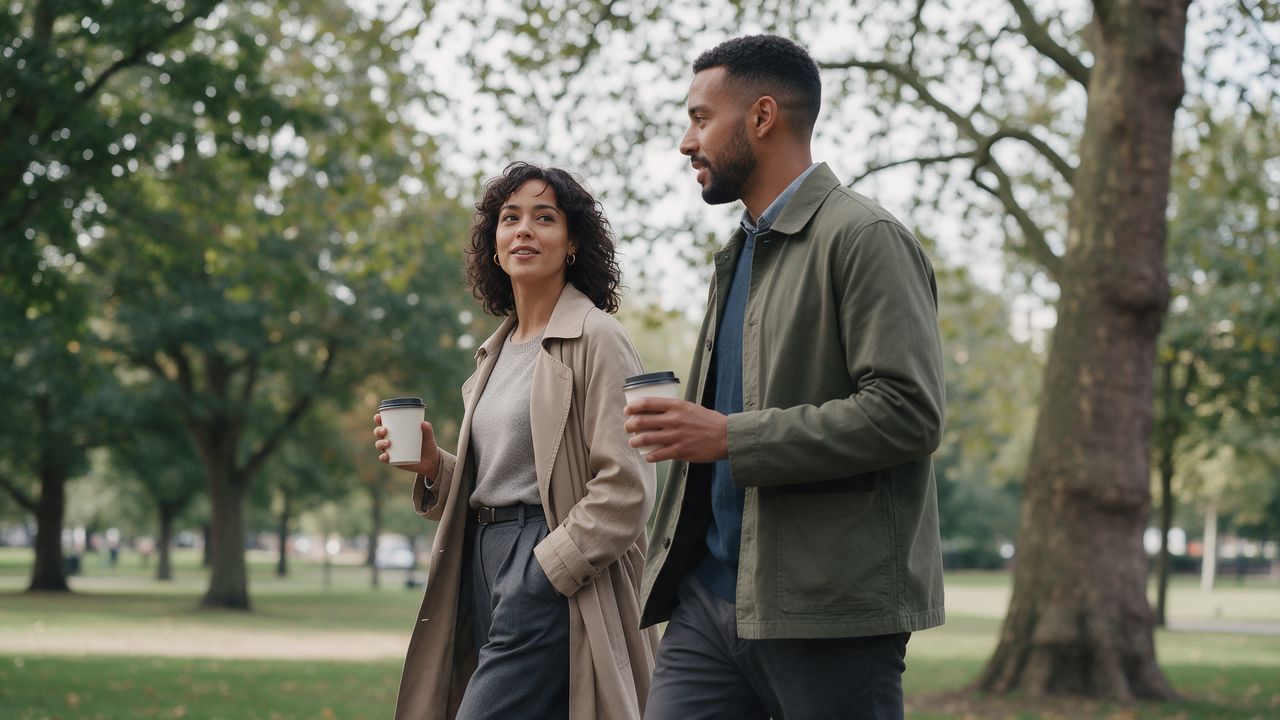
Now imagine having that conversation while walking through a park, side by side with a colleague, getting some fresh air and daylight. For many meetings, it would be better on every level.
Why walking helps
It boosts creative thinking. In a 2014 study, Stanford researchers Marily Oppezzo and Daniel Schwartz asked people to do tests of creative thinking while sitting or walking. Walking, whether outdoors or on a treadmill facing a blank wall, substantially increased the number of creative ideas people came up with. The effect continued for a while after they sat back down.
It gets you moving. Many office workers sit for most of the day. A 30-minute walking meeting can add several thousand steps.
It changes the dynamic. Walking side by side feels less formal and less confrontational than sitting across a desk. Many people find it easier to talk openly, especially about difficult subjects.
It's good for mood. Daylight, fresh air and movement all help lift energy and mood.
The value of awe
Berkeley psychologist Dacher Keltner has studied the effects of awe, the feeling of being in the presence of something vast or wonderful. In a 2020 study he worked on, led by Virginia Sturm, older adults who took a weekly 15-minute "awe walk", paying attention to the world around them, reported more positive emotions and less distress over eight weeks than those who took ordinary walks.
A walking meeting won't always be awe-inspiring. But a route that takes in trees, water or an open view can add something a meeting room never will.
Open-air living
The Norwegian idea of friluftsliv, "open-air living", is about spending time outdoors in all weathers. Walking meetings are a simple way to bring a bit of it into the working day.
Which meetings work best
Walking meetings work well for:
- one-to-ones and catch-ups
- brainstorming and talking through ideas
- coaching, mentoring and career conversations
- difficult conversations, where side by side feels easier than face to face
- small groups of two or three people
They work less well for:
- meetings that need screens, documents or detailed note-taking
- large groups
- confidential conversations, unless you're somewhere private
How to run a good one
Ask first. Not everyone will want to walk, or be able to. Offer it as an option, not a requirement, and be ready to sit down if that works better.
Think about accessibility. Choose a route that's flat, step-free and suitable for everyone in the meeting. Keep the pace comfortable.
Plan the route. Choose a loop that takes roughly the length of the meeting, so you finish where you started. Avoid busy roads where you'll struggle to hear each other.
Share an agenda in advance. Keep it to two or three points. Walking meetings work best when they're focused.
Warn people. Let them know so they can wear suitable shoes and bring a coat.
Capture actions afterwards. Spend five minutes at the end, or straight after, writing down what was agreed.
Don't let the weather stop you. Light rain and cold aren't a reason to cancel with the right clothes. Heavy rain, ice or heat might be.
Social connection
Yale psychologist Laurie Santos often highlights social connection as one of the most reliable sources of happiness. Walking meetings can bring colleagues closer, partly because they feel more like a conversation between people than a work transaction.
This week
Look at your diary and pick one one-to-one or catch-up that doesn't need a screen. Ask the other person if they'd like to do it as a walk.