
Energy, sleep and recovery
How to nap without waking up worse
Evidence-based guidance on 10–20 minute naps, avoiding sleep inertia and protecting night-time sleep.
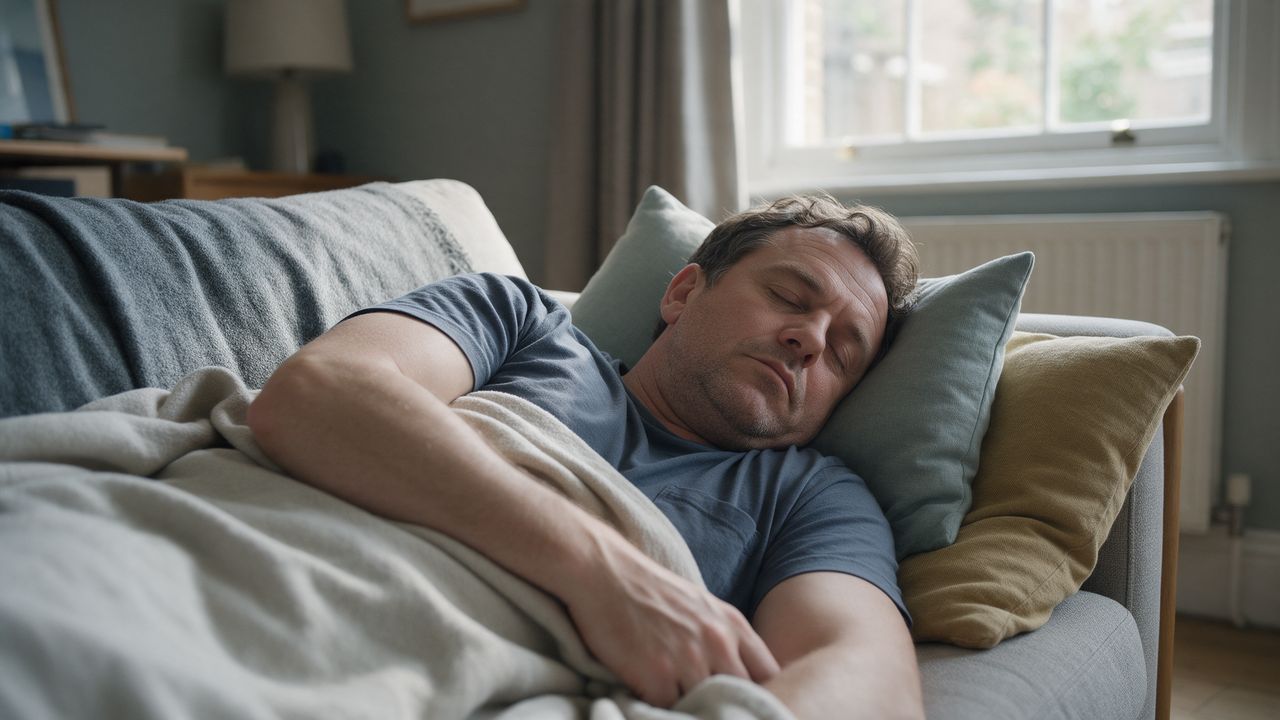
You lie down for "just twenty minutes" on a Sunday afternoon. Two hours later you wake up, confused, with a dry mouth and a headache, unsure whether it's morning or evening. Then at 11pm you're wide awake.
Naps have a mixed reputation for exactly this reason. Done badly, they leave you worse off. Done well, they're one of the simplest ways to top up your energy.
Why naps work
Sleep scientist Matthew Walker, at the University of California, Berkeley, explains our need for sleep through something called sleep pressure. From the moment you wake, a chemical called adenosine slowly builds up in the brain. The more of it there is, the sleepier you feel. Sleep clears it away.
A nap clears some of that pressure, which is why you feel more alert afterwards. In a well-known study for NASA in the 1990s, pilots on long-haul flights who were allowed a planned nap of around 25 minutes performed noticeably better on alertness tests than those who weren't.
The short version is best
The ideal length for most people is 10 to 20 minutes. That's long enough to feel refreshed but short enough to stay in light sleep.
Once a nap goes past about 30 minutes, you're more likely to slip into deep sleep. Waking from deep sleep is what causes that heavy, groggy feeling known as sleep inertia. It can take half an hour or more to wear off.
A longer nap of around 90 minutes, a full sleep cycle, can avoid the grogginess because you wake at the end of the cycle. But it takes a big bite out of your sleep pressure, which can make it harder to sleep that night.
Timing matters
Most people have a natural dip in alertness in the early afternoon, roughly between 1pm and 3pm. It's part of the body's daily rhythm, and it's why so many cultures have a tradition of an afternoon rest. That's the best window for a nap.
Napping later than about 3pm or 4pm tends to eat into your night-time sleep. If you have trouble falling asleep at night, it's usually better to skip naps altogether.
The coffee nap
It sounds contradictory, but research at Loughborough University in the 1990s found that drinking a coffee immediately before a short nap worked better than either on its own for tired drivers. Caffeine takes around 20 minutes to kick in. If you drink it and then nap straight away, you wake up just as it starts working, and the nap has also cleared some adenosine.
It isn't for everyone, and it's best avoided in the afternoon if caffeine affects your sleep.
How to nap well
- Set an alarm for 20 minutes, or 25 to allow time to drift off.
- Make it dark and quiet if you can. An eye mask and earplugs help.
- Lie down or recline. Sitting fully upright makes it harder to fall asleep.
- Don't worry if you don't sleep. Resting quietly with your eyes closed still helps.
- Get up straight away when the alarm goes. Have a glass of water, open a window or step outside for a few minutes of daylight.
Napping at work
Few UK workplaces have nap rooms. But a short rest in a parked car, a quiet room or even with your eyes closed at your desk during a break can help, especially for shift workers and people driving long distances.
If you drive for work and feel sleepy at the wheel, the Highway Code advises stopping somewhere safe, having a caffeinated drink and taking a short nap before carrying on.
When naps are a warning sign
Needing a nap every day, or falling asleep without meaning to, can be a sign that you're not getting enough sleep at night, or of a sleep disorder such as sleep apnoea. Naps should be a top-up, not a substitute.
Try a proper nap this week
Next time you have a free early afternoon, set an alarm for 20 minutes, lie down somewhere dark and see how you feel afterwards compared with your usual slump.
Where to get support If you're very sleepy during the day despite sleeping for seven hours or more, or you often fall asleep without meaning to, speak to your GP.