
Energy, sleep and recovery
A 30-minute wind-down for nights when your brain won't switch off
A step-by-step 30-minute pre-bed routine that covers light, screens, a brain dump and relaxation.
You turn the light out, close your eyes, and your brain decides this is the perfect time to remember the email you forgot to send, worry about Thursday's meeting and replay something embarrassing from 2009.
Most of us expect to go from busy to asleep in a few minutes. But the brain doesn't have an off switch. It has a dimmer, and it needs a bit of time to turn it down. Here's a simple routine that takes half an hour.
Before you start: set the room
Sleep scientist Matthew Walker, at the University of California, Berkeley, often points out that we need our body temperature to drop slightly to fall asleep. A cool bedroom helps. He suggests aiming for around 18°C. Make the room as dark as you can, with blackout curtains or an eye mask, and keep it quiet, or use steady background noise like a fan if total silence feels unsettling.
30 minutes before sleep: dim the lights
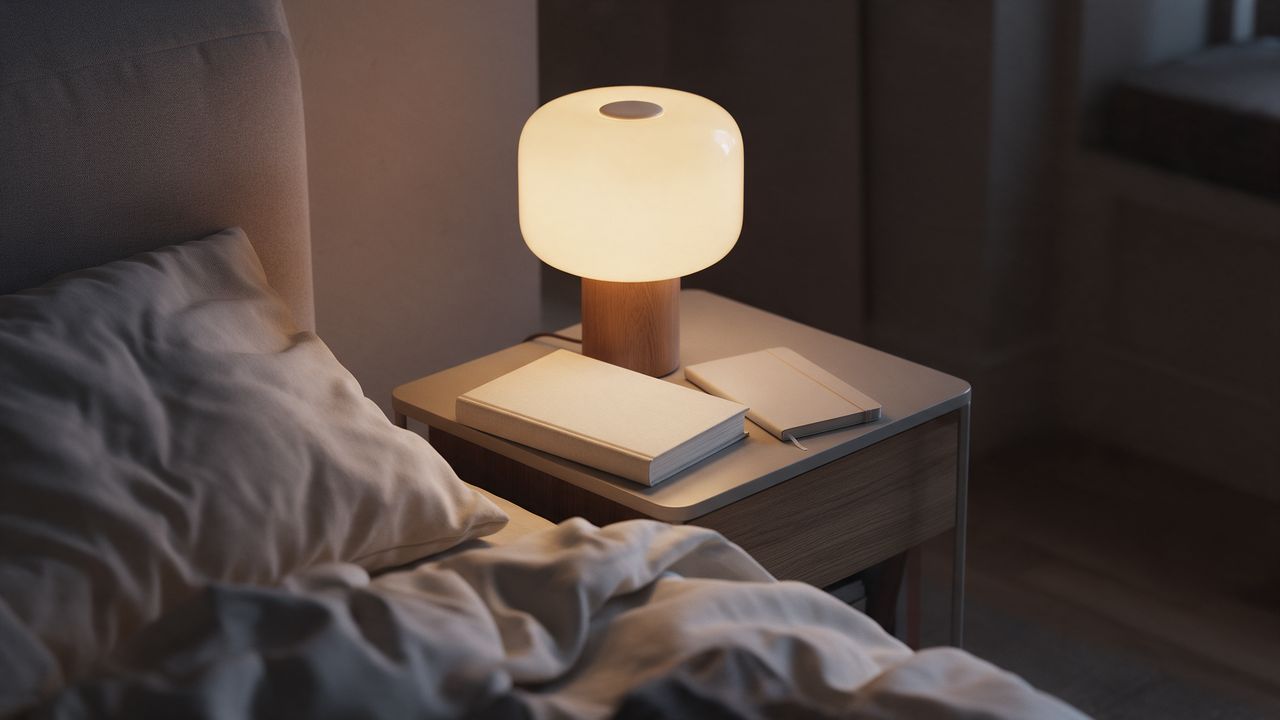
Bright light in the evening tells the brain it's still daytime and delays the release of melatonin, the hormone that helps signal sleep. Switch off overhead lights and use lamps instead. Warm, low lighting makes a noticeable difference.
This is also the time to put your phone away, or at least put it on charge out of reach. Screens can delay sleep a little through their light. The bigger issue is usually what's on them: messages, news and endless videos keep the mind busy and alert.
25 minutes before: empty your head onto paper
Grab a notebook and write down everything that's on your mind for tomorrow. In a 2018 study at Baylor University, psychologist Michael Scullin found that people who spent five minutes writing a to-do list for the next few days fell asleep faster than people who wrote about things they'd already done. The more specific their lists, the quicker they dropped off.
It works because it gets the thoughts out of your head and somewhere safe. If something pops up later in bed, you can tell yourself it's on the list.
20 minutes before: something warm
A warm bath or shower in the evening can help you fall asleep. It sounds odd, given that the body needs to cool down, but it works because warming your skin draws heat away from your core afterwards. A 2019 review of studies found that a warm bath or shower one to two hours before bed helped people fall asleep more quickly. If you don't have time for that, a warm, caffeine-free drink is a pleasant alternative.
15 minutes before: something slow
Choose something calming that doesn't involve a screen. Read a book (not a gripping thriller), do some gentle stretches, listen to quiet music or a podcast with a sleep timer, or do a crossword. The aim is to give your mind something to rest on that isn't your to-do list.
5 minutes before: breathe
Once you're in bed, try slow breathing: in through your nose for a count of four and out through your mouth for a count of six or eight. A longer out-breath helps the body shift into its calmer state. Keep going for a few minutes, or until you drift off.
Make it cosy
The Danish idea of hygge is all about warmth, comfort and small pleasures: soft lighting, a blanket, a warm drink, a good book. It's a pretty good description of what a wind-down should feel like. If your routine feels like a chore, change it until it feels like a treat.
Turn it into a habit
BJ Fogg, a behaviour scientist at Stanford, suggests attaching new habits to things you already do, using the formula "After I ___, I will ___". For example: "After I brush my teeth, I'll write tomorrow's list." "After I switch off the main light, I'll put my phone on charge in the kitchen."
Start with one or two steps rather than the full half-hour. Add more as they become automatic.
Tonight
Choose two steps from this routine: perhaps dimming the lights and writing your list. Do them tonight and every night this week, and see how quickly you fall asleep.
Where to get support If you regularly struggle to sleep for three nights a week or more, for longer than three months, speak to your GP. Cognitive behavioural therapy for insomnia (CBT-I) is the recommended first treatment.