
Relationships, meaning and purpose
Finding meaning again after a loss
How people rebuild a sense of purpose after bereavement or major loss.
In the first weeks after a death, people often say the world looks strangely the same. The buses still run. Someone at work complains about the coffee. And you wonder how everyone else can carry on when your life has been turned inside out.
Later, often much later, another question arrives: what now? Who am I without them? What gives life meaning after this?
This article is about that second question. It isn't about getting over a loss. Most people never do, and there's no reason they should.
Growing around grief
Grief counsellor Lois Tonkin described a way of picturing grief that many bereaved people find helpful. People often expect grief to shrink over time until it's small enough to ignore. Tonkin noticed that, for many of her clients, the grief didn't really shrink. Instead, their lives slowly grew around it. New experiences, relationships and routines made the grief a smaller part of a bigger whole, even though it stayed the same size.
That fits the experience of many people who say the pain still catches them years later, while their life has also become full again.
Moving between two kinds of coping
Researchers Margaret Stroebe and Henk Schut proposed what they call the dual process model of grief. They found that people coping well with loss tend to move back and forth between two things. Sometimes they turn towards the loss: crying, remembering, looking at photos, talking about the person. At other times they turn towards rebuilding: sorting practical things, trying new activities, spending time with friends, taking a break from grief.
Both matter. Staying only with the loss can leave you stuck. Avoiding it completely tends to catch up with you. Moving between the two is healthy, even if it feels odd to laugh on a day you also cried.
Keeping the connection
For much of the twentieth century, the advice to bereaved people was to "let go" and "move on". Researchers Dennis Klass, Phyllis Silverman and Steven Nickman challenged that in the 1990s with the idea of continuing bonds. They found that many people keep a relationship with the person who died, through memories, rituals, talking to them or living by their values, and that this is often comforting rather than unhealthy.
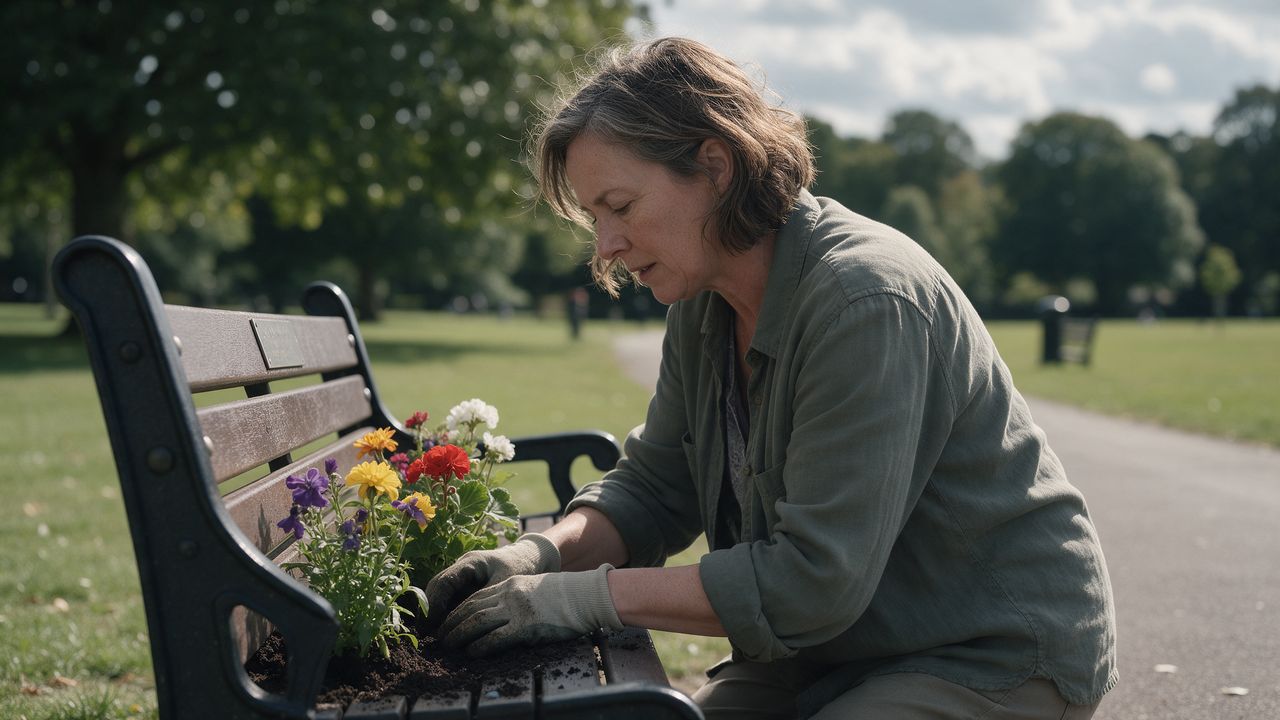
Finding meaning after loss often comes through these bonds. Running the race your dad always wanted to do. Planting your mum's favourite flowers. Raising money for the hospice that cared for your partner.
Meaning, slowly
Martin Seligman, the founder of positive psychology, describes meaning as belonging to and serving something larger than yourself. After a loss, meaning tends to be rebuilt rather than found, a little at a time. Psychologist Robert Neimeyer, who has studied grief for decades, calls this meaning reconstruction: slowly making sense of what happened and how it fits into your life story.
There's no deadline. Some people find new purpose within months. For others it takes years.
Being looked after
Psychologist Dacher Keltner's research on compassion suggests that being cared for helps the body as well as the mind. It calms the nervous system and helps us feel safe. Many bereaved people find it hard to accept help. If you can, let people in. Say yes to the meal, the walk, the offer to sit with you.
The beauty of what remains
The Japanese idea of wabi-sabi sees beauty in things that are imperfect, impermanent and incomplete. It doesn't make loss less painful. It does offer a way of seeing a life that has been changed by loss as still whole, still worth living, and still capable of beauty.
A gentle place to start
When you feel ready, and only then, try writing a few lines in answer to this question: "What did they bring into my life that I want to carry forward?" It might be a value, a habit, a sense of humour or a place. Then think of one small way to carry it this month.
Where to get support Cruse Bereavement Support offers free help on 0808 808 1677. You can also speak to your GP, especially if grief is making it hard to function day to day. If you're struggling to cope or having thoughts of ending your life, call Samaritans free on 116 123, any time.