
Relationships, meaning and purpose
Why it's hard to make friends as an adult, and what helps
Research on adult friendship, with practical ways to meet people and deepen connections.
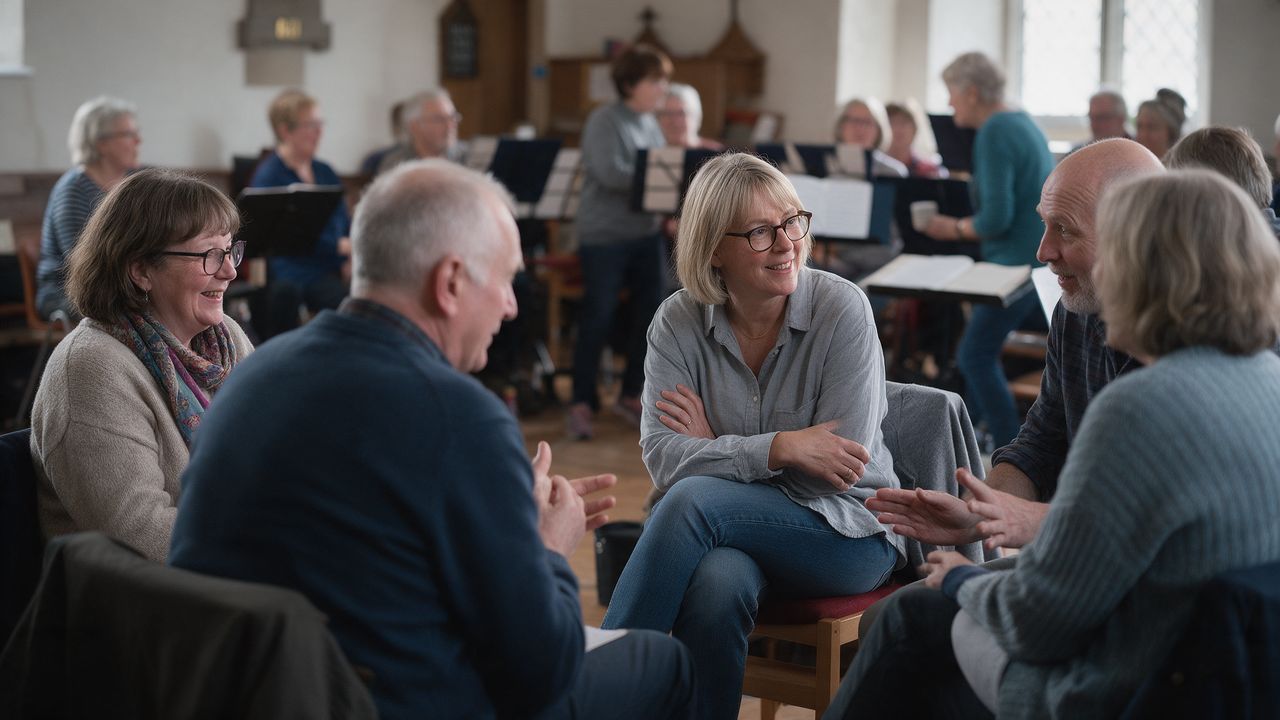
At school, friends seemed to happen without trying. You sat next to someone in class, played on the same team or got the same bus, and before you knew it you were inseparable. As an adult, it's different. You move to a new town, change jobs, have children or see old friends drift away, and suddenly you realise you can't remember the last time you made a new friend.
If that sounds familiar, you're far from alone. Making friends as an adult is genuinely harder, and there are good reasons why.
What friendship needs
Sociologist Rebecca Adams, who has studied friendship for decades, has described three conditions that make friendships more likely to form:
- proximity: being physically close to people
- repeated, unplanned interaction: seeing the same people again and again, without having to arrange it
- a setting that encourages people to let their guard down and share things about themselves
School and university provide all three. Adult life often provides none. We commute, work in different places, spend evenings at home and see people mainly by appointment.
It takes more time than you'd think
In a 2018 study, communication researcher Jeffrey Hall at the University of Kansas looked at how long it takes for people to become friends. He estimated that it takes around 50 hours together to go from acquaintance to casual friend, around 90 hours to become a friend, and more than 200 hours to become a close friend.
That's a lot of hours. It explains why friendships form so easily when you see someone every day, and so slowly when you only meet once a month.
Why it matters
Yale psychologist Laurie Santos often highlights social connection as one of the most reliable sources of happiness. The link with health is striking too. A large 2010 review led by Julianne Holt-Lunstad at Brigham Young University found that people with stronger social relationships had about a 50% greater likelihood of survival over the studies' follow-up periods than those with weaker ones.
We underestimate how much people like us
Many people hold back from making the first move because they assume the other person isn't interested. Research suggests we're usually wrong. In a 2018 study, psychologists Erica Boothby, Gus Cooney and colleagues found that after conversations with strangers, people consistently underestimated how much their conversation partner liked them. The researchers called it "the liking gap".
Santos points out that we're often poor at predicting what will make us happy, and this is one example. We expect reaching out to feel awkward and to be unwelcome. More often, it's appreciated.
What helps
Find repeated contact. Join something that meets regularly, so you see the same people again and again. A weekly running club, choir, five-a-side team, book group, evening class or volunteering role all work well. One-off events are less likely to lead to friendship.
Say yes. When someone invites you to something, try to go, even if you're tired. Each time adds to those hours.
Be the one who asks. Suggest a coffee, a walk or a drink after the class. Most people are waiting for someone else to make the first move.
Share a little. Friendship grows when people open up. You don't need to share everything, but letting people know something real about you helps.
Reconnect. Old friendships often need only a message to come back to life. You've already put in the hours.
Be patient. It takes months, not weeks. Keep showing up.
I am because we are
The Southern African idea of ubuntu, "I am because we are", sees people as fundamentally connected to each other. Friendship is part of what makes us who we are, which is a good reason to make time for it.
This month
Choose one regular activity that would put you in contact with the same people every week, and go three times before you decide whether it's for you. And message one old friend you've lost touch with.
Where to get support If you're feeling lonely, the Campaign to End Loneliness has information and ideas. Older people can call Silver Line free on 0800 4 70 80 90, any time. If loneliness is affecting your mood, speak to your GP.