
Why we stay up late when we know we shouldn't
Explores why people reclaim 'me time' late at night and offers practical ways to take back evening time earlier.
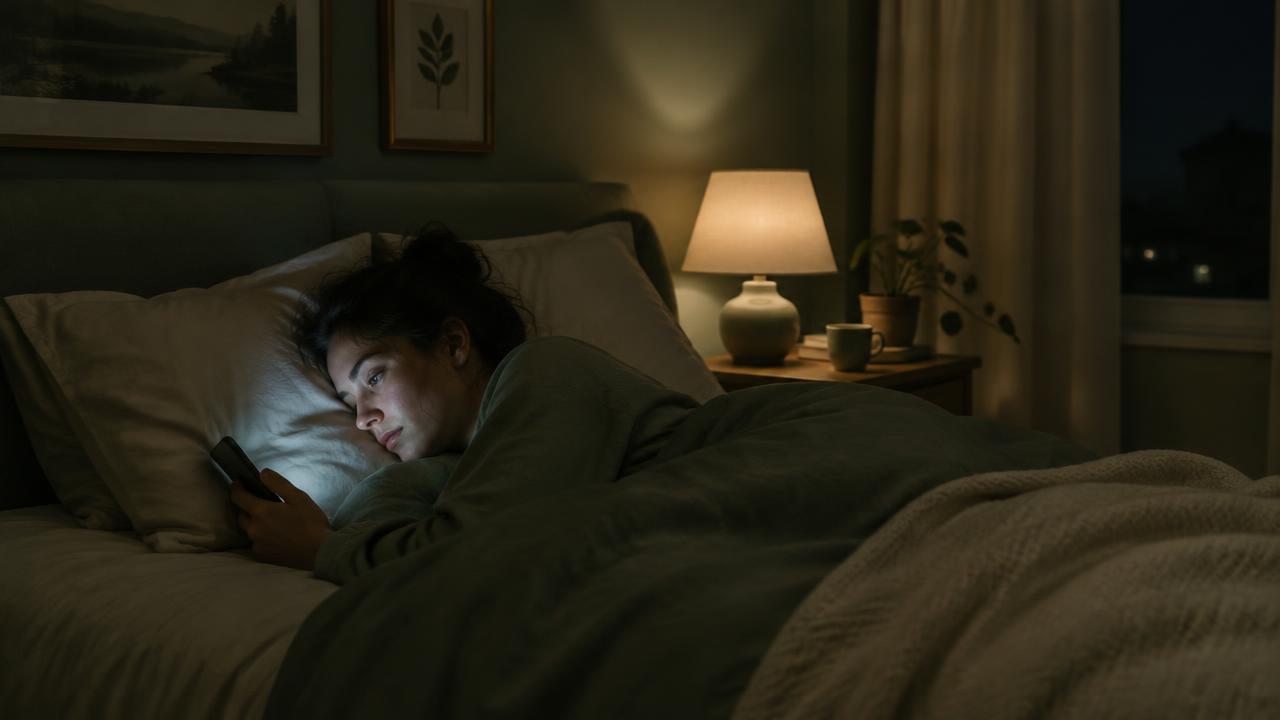
It's 11.40pm. You're tired, you've got an early start, and you've just told yourself "one more episode". Forty minutes later you're reading an article about a celebrity you don't even like.
There's a name for this. In China, people started calling it bàofùxìng áoyè, which translates roughly as "revenge staying up late". The English version, revenge bedtime procrastination, spread online in 2020, but researchers had been studying the habit for years. Floor Kroese and her colleagues at Utrecht University described "bedtime procrastination" in 2014: going to bed later than you meant to, with no outside reason for it, while knowing you'll feel worse for it.
It isn't really about bedtime
The "revenge" part is the clue. Most people who do this aren't short of willpower. They're short of time that feels like their own. If your day is work, commuting, chores and looking after other people, the hour after everyone else has gone to bed may be the only part of the day nobody else can claim. Going to sleep means giving it up.
So the late night is a way of taking something back. It makes sense, which is partly why telling yourself to "just go to bed" rarely works.
What it costs
Sleep scientist Matthew Walker, at the University of California, Berkeley, has spent years showing how much short sleep affects mood, concentration, appetite and our ability to cope with stress. A few late nights won't do lasting harm, but a pattern of them does add up, and the tired, irritable version of you that turns up the next day tends to have an even worse evening, which makes another late night more likely.
Fix the morning first
One of Walker's most practical suggestions is to anchor your sleep on a fixed wake time rather than a bedtime. Get up at roughly the same time every day, weekends included. It sounds backwards, but it builds steady sleep pressure, so you feel sleepy at a more sensible hour without having to force it. A bedtime is easy to negotiate with at midnight. An alarm is not.
Make the late night harder, not forbidden
Habit researcher Wendy Wood, at the University of Southern California, has shown that we rely on friction far more than willpower. We do what's easy and put off what's awkward. You can use that.
- Charge your phone outside the bedroom, or at least across the room.
- Switch off autoplay on streaming services so the next episode doesn't start on its own.
- Set a "lights down" alarm for an hour before you want to be asleep. It isn't an order to go to bed, just a signal to start winding down.
None of this bans the late evening. It just means staying up takes a deliberate choice rather than happening by default.
Give yourself the time earlier
The real fix is making room for "me time" before the day ends. Look for half an hour in the early evening that's properly yours, and protect it as you would a meeting. Make it something you look forward to: a bath, a book, music, a walk, a phone call with a friend.
The Danish idea of hygge is useful here. It's about cosiness and small comforts, like low light, a warm drink and a blanket. Building those into your evening makes the wind-down something to enjoy rather than a punishment for being sensible.
Try this for a week
Choose your wake-up time and stick to it for seven days. Move your phone charger out of reach of the bed. Then claim thirty minutes between 7pm and 9pm that belong only to you. Most people find the urge to stay up late fades once the evening no longer feels like the only time they get to live.
Where to get support If you regularly struggle to get to sleep or stay asleep for more than three months, speak to your GP. Cognitive behavioural therapy for insomnia (CBT-I) is the recommended first treatment and is available on the NHS in many areas.