
The stress bucket, and how to stop it overflowing
Uses the stress bucket analogy to identify stressors and the 'taps' that release pressure.
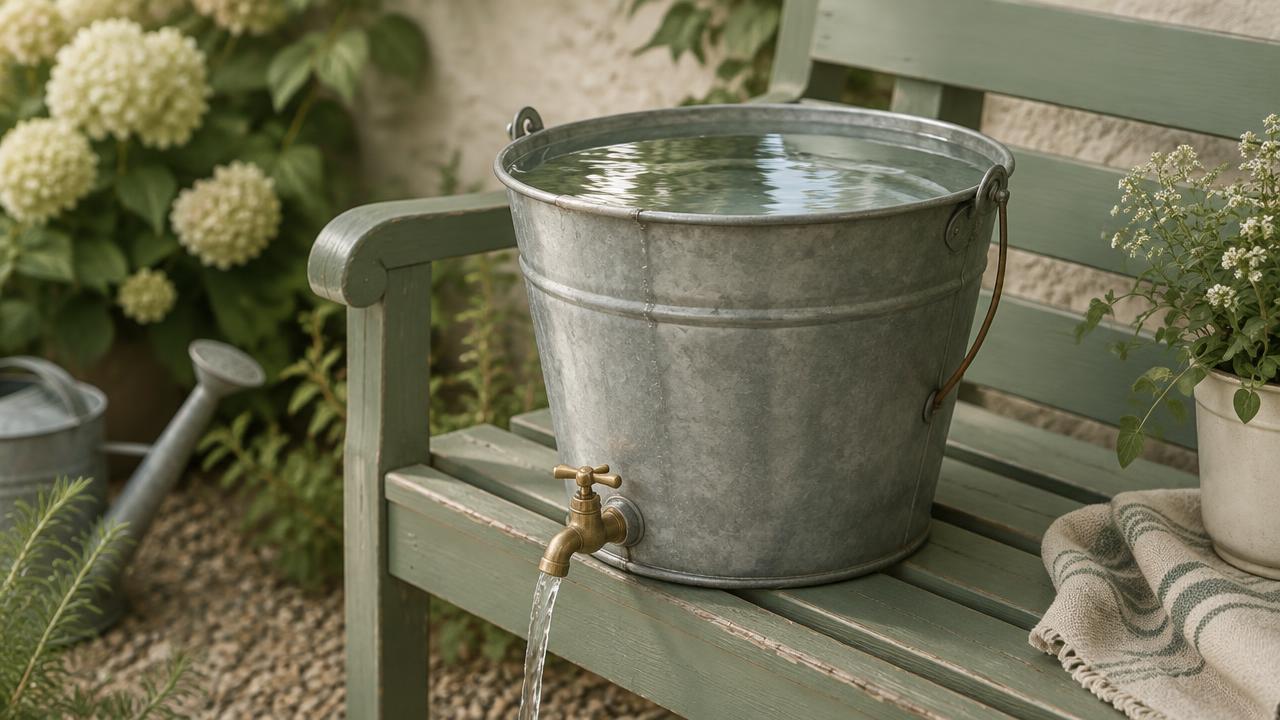
You've coped with a tough month at work, a sick child and a boiler that packed in. Then someone takes the last oat milk and you find yourself close to tears in the office kitchen.
It wasn't about the milk. Your bucket was already full.
The idea
The stress bucket is a simple picture that mental health trainers use all the time. It's based on the stress vulnerability model, developed by psychologists Alison Brabban and Douglas Turkington.
Imagine you're carrying a bucket. Everything that puts pressure on you pours into it: work, money, health, relationships, caring, noise, the news. When the water gets near the top, even a small extra drip makes it overflow, and that overflow is what we experience as being overwhelmed, snapping, crying or shutting down.
Two things decide how quickly it fills.
The size of the bucket. Some people have a smaller bucket at certain times in their lives, perhaps because of past experiences, health conditions, grief, hormonal changes or just being run down. There's no shame in this. It simply means the same pressures fill it faster.
What's pouring in. Big stressors and small daily hassles both count. People often underestimate how much the small ones add up.
The taps
The good news is that the bucket has taps. These are the things that let some of the pressure out. Useful taps include:
- sleep and rest
- movement of any kind
- talking to someone you trust
- time outside
- hobbies and things that absorb you
- laughing
- saying no to something
- asking for practical help
There are also taps that seem to help but end up adding more water: drinking more than usual, working late to "get on top of things", cancelling plans, or scrolling at 1am. They give a moment of relief and then fill the bucket again.
Why the taps get forgotten
When the bucket is nearly full, the quick, automatic part of the brain takes charge. Daniel Kahneman, the psychologist who won a Nobel prize for his work on how we make decisions, described this fast thinking as efficient but short-sighted. It reaches for whatever is easiest right now, which is rarely the walk, the early night or the honest conversation.
So it helps to choose your taps in advance, while you're calm.
Make the taps easy to turn
Stanford's BJ Fogg says that any behaviour needs three things at the same moment: enough motivation, enough ability and a prompt. On a stressful day, motivation is low, so your taps need to be easy and clearly prompted.
"Exercise more" is a hard tap to turn. "Walk round the block after I shut my laptop" is much easier. "Talk to someone" can feel daunting, but "Text my sister when I get on the bus" is not.
Draw your own bucket
Take a piece of paper and draw a bucket.
- Inside it, write everything currently pouring in, big or small.
- Mark roughly how full it feels today.
- Around the bottom, draw some taps and label each one with something that genuinely helps you. Make each one specific and small.
- Circle two taps you'll use this week, and decide when.
Keep the drawing somewhere you'll see it. When you notice you're getting near the top, look at your taps before you reach for the easy ones.
Where to get support If your bucket feels full most of the time, or you're finding it hard to cope, talk to your GP or refer yourself for NHS talking therapies in England. In a crisis, call Samaritans free on 116 123 or text SHOUT to 85258.