
Stress and mindfulness
The hidden stresses of working from home
Practical boundaries and connection strategies for home workers.
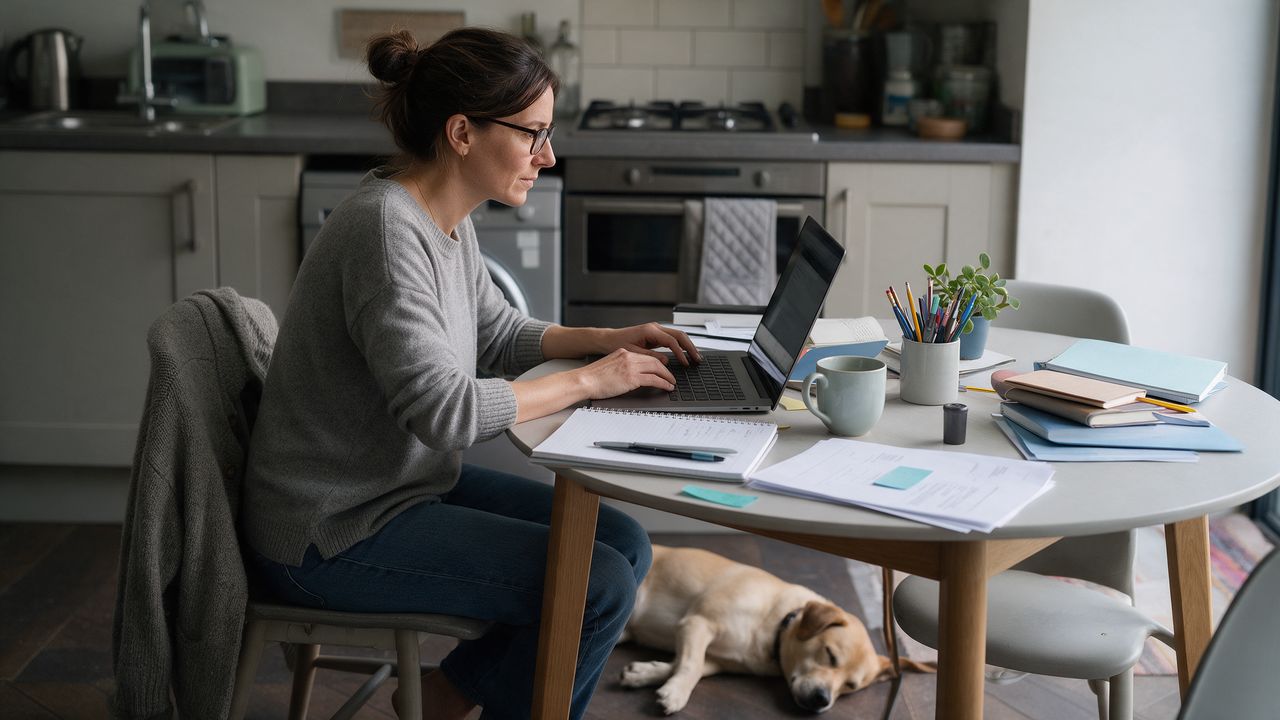
No commute. No office noise. Working in comfortable clothes, putting the washing on between meetings and being there when the kids get home from school. For millions of people in the UK, working from home, at least some of the time, has made life better.
But it has its own stresses, and they're easy to miss. The days can blur together, work creeps into evenings, and some people go days without a proper conversation with a colleague.
Common hidden stresses
Blurred boundaries. When your kitchen table is also your office, it's hard to switch off. Many home workers find themselves checking emails late at night or starting work before breakfast.
Longer hours. Without a commute to mark the end of the day, it's easy to keep going. Many people end up working longer hours at home than they did in the office.
Loneliness. Casual chats in the kitchen, lunch with colleagues and quick questions across the desk all disappear. For some people, this leads to feeling isolated, out of the loop or forgotten.
Constant video calls. Back-to-back video meetings can be tiring. People often find themselves staring at their own face for hours, with fewer natural breaks.
Poor set-up. A laptop on the sofa or a kitchen chair for eight hours a day can lead to back, neck and shoulder pain.
Sitting all day. Without walks to the station, the coffee shop or meeting rooms, some home workers barely move.
Create clear cues
Habit researcher Wendy Wood has found that our behaviour is strongly shaped by cues in our environment: places, times and routines. In an office, the building itself tells you when you're at work. At home, you need to create those cues.
- Have a dedicated workspace if you can, even if it's just one end of a table. Avoid working from bed or the sofa.
- Start and finish at set times. Put them in your diary.
- Use a "fake commute". A short walk before you start and after you finish can mark the beginning and end of the working day.
- Pack away at the end of the day. Close your laptop and put it out of sight. It tells your brain work is over.
- Change your clothes. Dressing for work, then changing afterwards, can help mark the switch.
Stay connected
Yale psychologist Laurie Santos often highlights social connection as one of the most reliable sources of happiness. Home working can quietly strip much of it away.
- Turn some meetings into phone calls, so you can walk while you talk.
- Keep cameras on for team meetings where it feels comfortable, to keep a sense of connection.
- Make time for informal chat, such as a virtual coffee or a few minutes of catch-up at the start of a meeting.
- Go into the office, or a co-working space, when you can.
- Meet a colleague or friend for lunch on home-working days.
- Message people for reasons other than work.
Look after your body
- Set up your workspace properly, with the top of the screen at eye level, a supportive chair and your feet flat on the floor. In the UK, employers have the same health and safety duties for home workers who use screens regularly as they do for office workers, including assessing their workstations.
- Take short breaks every hour to stand up and move.
- Get outside at least once a day, ideally in daylight.
- Leave gaps between video calls, even five minutes.
Notice the warning signs
If you're working much longer hours, feeling isolated, finding it hard to switch off or feeling low, it's worth talking to your manager. Small changes, like more office days, clearer hours or more team contact, can make a big difference.
This week
Choose one cue to mark the start and end of your working day, like a short walk or packing your laptop away. And arrange one non-work conversation with a colleague.
Where to get support If you're feeling isolated or stressed, speak to your manager or HR. Your workplace may have an employee assistance programme. If you're feeling low for more than a couple of weeks, speak to your GP.