
Men's health
Talking about mental health as a man
Why men are less likely to talk about how they feel, and practical ways to start the conversation.
"How are you doing?" "Yeah, not bad. You?" "Can't complain."
That exchange happens thousands of times a day, in pubs, offices, changing rooms and on building sites. Often, at least one of the people saying "not bad" is having a really hard time.
Men are less likely than women to talk about how they're feeling, less likely to see a GP about their mental health, and less likely to have therapy. Only around a third of people referred to NHS talking therapies are men. Yet around three-quarters of people who die by suicide in the UK are men. Something isn't adding up.
Why it's harder
Most men aren't short of feelings. They're short of practice and permission.
Many grew up with messages like "big boys don't cry", "man up" and "just get on with it". Those messages can be well meant, about toughness and resilience, but they teach that struggling is weakness and that talking about it is embarrassing. By adulthood, a lot of men simply don't have the words, or the habit, of saying "I'm not OK".
There's also the fear of being a burden, or of being seen differently by mates, partners or colleagues. And some men express distress in ways that aren't recognised as mental health problems at all: irritability, anger, drinking more, working all hours or withdrawing.
Connection is protective
The Harvard Study of Adult Development has followed hundreds of men since the late 1930s, and later their families. Its current director, psychiatrist Robert Waldinger, says the clearest finding is that good relationships keep people healthier and happier. The quality of men's relationships in midlife predicted their health in old age better than their cholesterol levels did.
Martin Seligman, the founder of positive psychology, lists relationships as one of the five pillars of wellbeing. Yale psychologist Laurie Santos makes a similar point in her teaching: social connection is one of the most reliable sources of happiness, and one we tend to underrate.
Side by side, not face to face
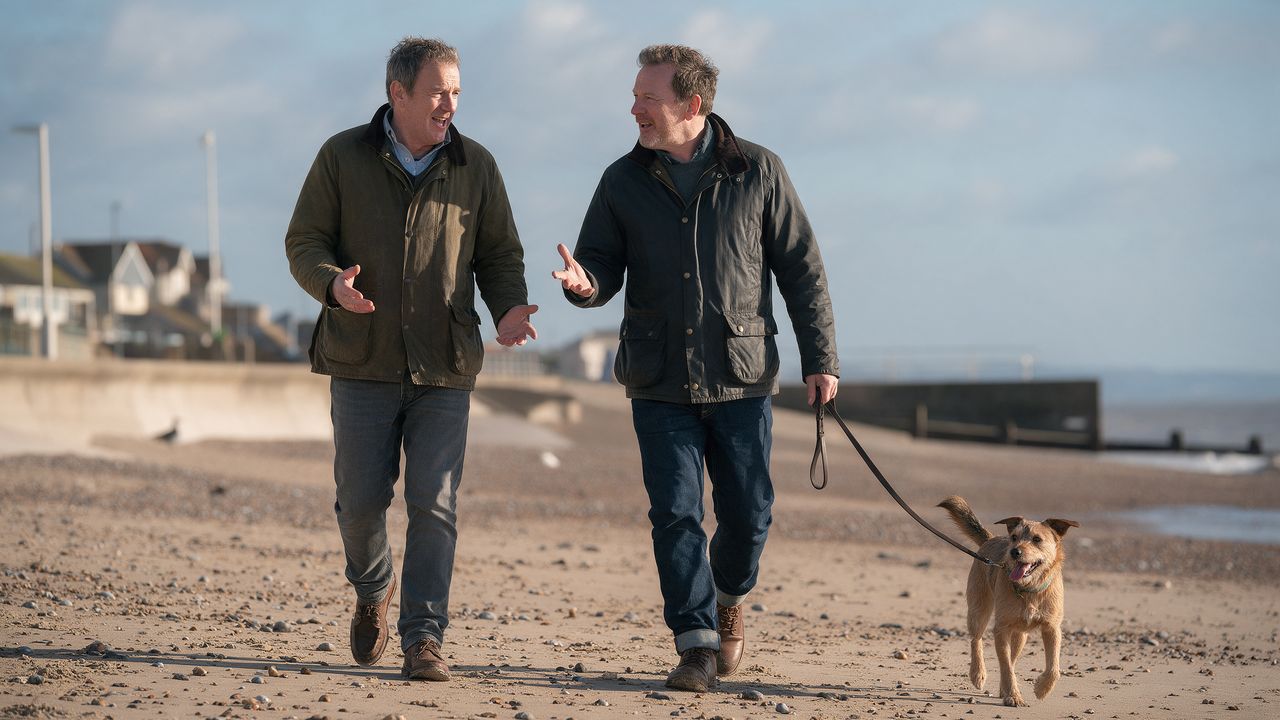
Many men find it easier to talk when they're doing something together rather than sitting opposite each other. That's partly why Men's Sheds, community workshops where men make and mend things together, have spread across the UK. Conversations happen naturally over a workbench, on a walk, on a fishing trip or in the car.
If you want to check on a mate, you don't need a formal chat. Ask him for a walk, a coffee or help with a job. Then, at some point, ask: "How are things really?" And if he says "fine", it's OK to ask again: "Are you sure? You've seemed a bit quiet lately."
If you're the one struggling
You don't need to have a big conversation all at once. Some ways to start:
- Tell one person one true thing. "I've been finding things a bit hard lately" is enough.
- Pick someone you trust and a setting that feels comfortable.
- If talking face to face feels too much, send a message.
- If you'd rather talk to someone you don't know, try a helpline or a peer group like Andy's Man Club, which runs free, informal talking groups for men across the UK.
- Speak to your GP. They hear about low mood, anxiety and stress every day.
Strength looks different
It takes more strength to say "I'm struggling" than to keep quiet. Many men who've opened up describe the relief of finding out that friends had been through similar things and just hadn't said.
This week
Think of one man in your life you haven't properly caught up with in a while. Message him and suggest doing something together. And next time someone asks how you are, try answering a little more honestly than "not bad".
Where to get support CALM (Campaign Against Living Miserably) offers free, confidential support for anyone who's struggling on 0800 58 58 58, 5pm to midnight every day. Samaritans are available free on 116 123, any time. You can also speak to your GP or refer yourself for NHS talking therapies in England. If you're in immediate danger, call 999.