
Stress and mindfulness
Steadying your nerves before a big moment
Pre-event routines for managing nerves.
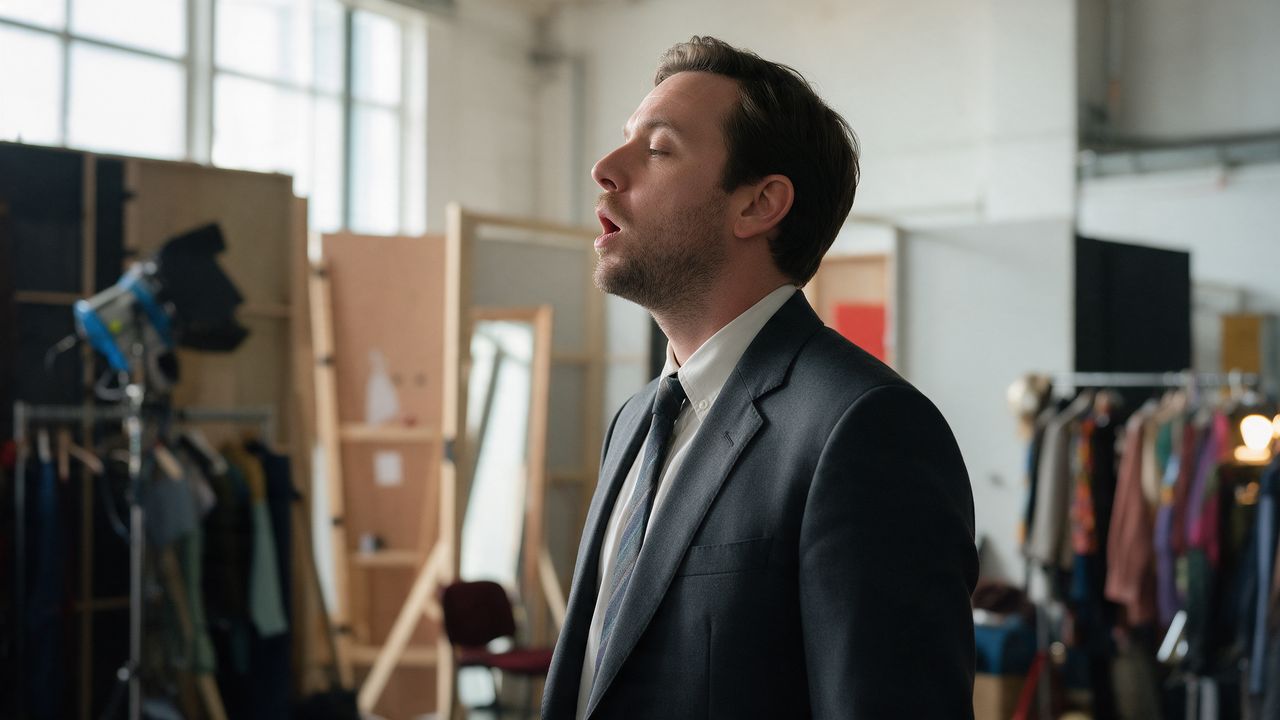
Your name is next on the list. In five minutes you'll be standing up in front of the board, or walking into an interview, or giving a speech at your best friend's wedding. Your heart is pounding, your mouth is dry and your hands won't keep still.
Almost everyone gets nervous before something important. The aim isn't to get rid of nerves altogether. A bit of adrenaline sharpens your focus and gives you energy. The aim is to stop the nerves from getting in your way.
Call it excitement
The physical signs of anxiety and excitement are almost identical: racing heart, quick breathing, butterflies in your stomach. What differs is how we interpret them.
In a 2014 study, Harvard Business School psychologist Alison Wood Brooks asked people to say either "I am anxious" or "I am excited" before a stressful task, such as singing karaoke in front of others, giving a speech or doing a maths test. Those who said "I am excited" performed better. Trying to calm down, she found, was less effective than reframing the nerves as excitement.
So instead of telling yourself to relax, try saying, "I'm excited. My body is getting ready for this."
Watch what you tell yourself
Martin Seligman, the founder of positive psychology, studied how people explain good and bad events to themselves. People who see setbacks as permanent and personal ("I always mess these up", "I'm hopeless at presenting") tend to feel worse and perform worse than those who see them as temporary and specific ("I struggled last time because I didn't practise the opening").
Before a big moment, notice any harsh predictions and swap them for something more balanced: "I've prepared well. I might stumble once or twice, and that's fine."
Prepare well, in the right way
Practise out loud. Rehearsing in your head isn't the same as speaking the words. Practise in front of a mirror, a friend or your phone's camera.
Know your first minute. The start is when nerves are at their worst. If you know your opening lines by heart, you'll get into your stride more easily.
Visit the space if you can. Knowing the room, the screen and where you'll stand removes some of the unknowns.
Plan for things going wrong. Psychologist Peter Gollwitzer's research on "if-then" plans shows that deciding in advance how you'll respond to a problem makes you much more likely to handle it well. "If I lose my place, then I'll pause, look at my notes and take a breath." "If they ask a question I can't answer, then I'll say I'll come back to them." Habit researcher Wendy Wood has also found that planning exactly when and where you'll act helps behaviours happen reliably.
A pre-event routine
Many performers and athletes have a set routine before they go on. It gives the mind something familiar to focus on. Try building your own, lasting five to ten minutes:
- Move. Walk, shake out your hands and arms, roll your shoulders. It uses up some of the nervous energy.
- Breathe. Breathe in through your nose for four, and out through your mouth for six. Do this five times.
- Ground yourself. Feel your feet on the floor. Notice three things you can see.
- Reframe. Say to yourself, "I'm excited."
- Remind yourself why. Think of the main thing you want your audience to take away.
What about power poses?
You may have heard that standing in a "power pose", hands on hips like a superhero, for two minutes changes your hormone levels and makes you more confident. The original 2010 study was widely shared, but later, larger studies failed to find the hormone effects, and one of the original authors has said she no longer believes them. Some people still find that standing tall makes them feel a bit more confident, so if it helps, do it. Just don't expect it to transform your body chemistry.
After it's over
Whatever happens, take a moment afterwards to notice what went well. It's easy to fixate on the one thing that went wrong and forget the ten that went right.
Before your next big moment
Write down your pre-event routine, and one "if-then" plan for the thing you're most worried about. Practise both before the day.