
Money matters
Making your money last until payday
Practical ways to avoid the end-of-month squeeze, from bill dates to weekly spending pots.
The first week after payday feels comfortable. A takeaway, a few drinks, a new top. By the third week, things are getting tight. By the last few days, you're checking your balance before every purchase, scraping together meals from the back of the cupboard and counting the days until the money comes in.
The end-of-month squeeze is very common, and how much you earn is only part of the story. Timing matters too, along with the small habits that make money disappear early in the month.
This article is general information, not financial advice.
Why money runs out early
Psychologist Daniel Kahneman and his colleague Amos Tversky described the planning fallacy: our tendency to be overly optimistic about the future. We underestimate how much things will cost and how long things will take. With money, it can mean assuming the end of the month will look after itself.
Payday also feels like a fresh start, and spending tends to be higher in the first few days. By the time bills come out, there's less left than expected.
Move your bill dates
Many people have bills going out at random times through the month, which makes it hard to know what you've really got to spend. Ask your providers whether you can move direct debits to the day after payday. Many companies, including energy suppliers, phone networks and councils, will let you choose.
Once all your bills go out at the start of the month, the money left is genuinely yours to spend.
Pay yourself first
If you can, set up a small automatic transfer into savings the day after payday, before you have a chance to spend it. Even £10 or £20 helps build a buffer for next time.
Use weekly spending money
A monthly budget can be hard to stick to, because four weeks is a long time. Breaking it into weekly amounts makes it easier.
- Work out what's left after bills and savings.
- Divide it by the number of weeks until your next payday.
- Move that amount into a separate account or "pot" each week, or take it out in cash.
- When it's gone, it's gone until the next week.
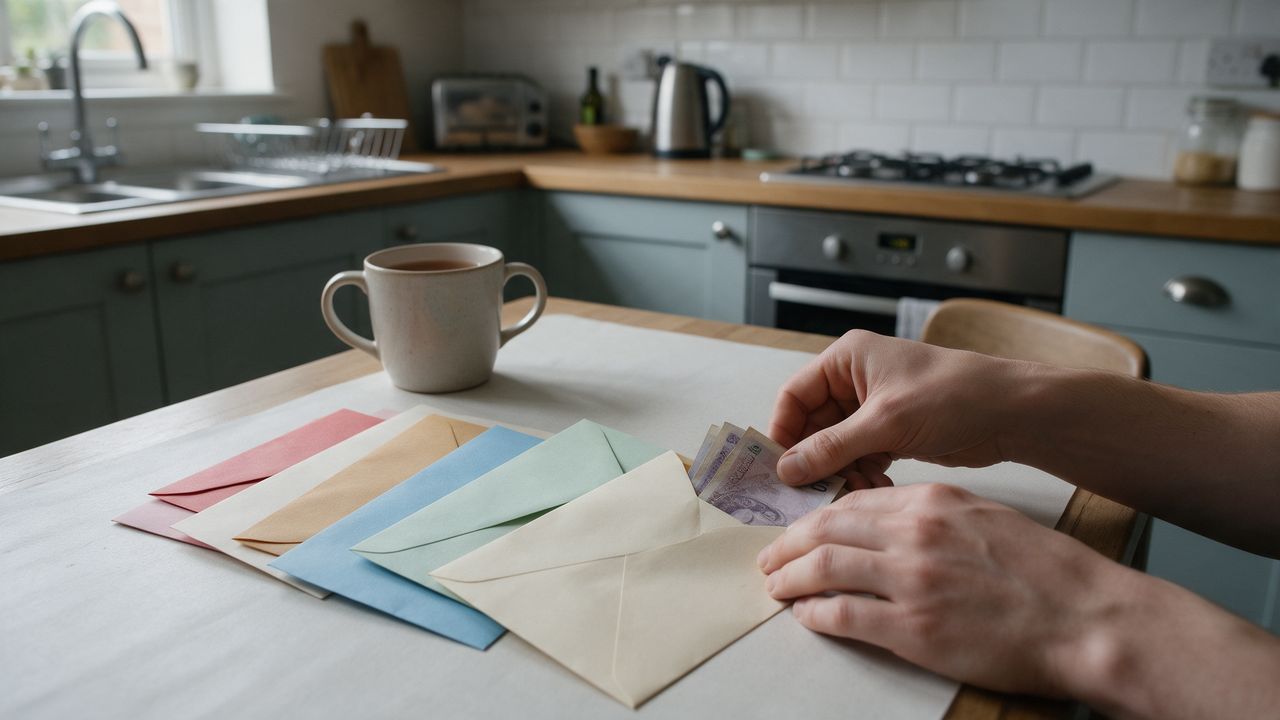
Many banks now let you set up separate pots or spaces within your account. Some people prefer a cash envelope system, where they take out each week's money in cash and keep it in labelled envelopes.
Build the habit
Habit researcher Wendy Wood has found that habits stick best when they're tied to stable cues, like the same time and place each week. Pick a regular slot, like Sunday evening, to move your weekly money, check your balance and plan the week's meals.
Spot the leaks
Small spending can add up quickly. For one month, write down everything you spend, or check your bank app every few days. Common leaks include:
- subscriptions you've forgotten about
- takeaways and food delivery
- daily coffees and snacks
- impulse buys online
- convenience shopping, rather than one planned shop
You don't have to cut out everything. Just choose which ones matter most to you.
Plan meals before you shop
Food is one of the easiest places to save money. Plan your meals for the week, make a list, and stick to it. Cook in batches and freeze portions for the end of the month.
Avoid costly fixes
When money's tight before payday, it can be tempting to use an overdraft, a credit card, "buy now, pay later" or a payday loan. These can be expensive, and can make next month even tighter. If you regularly can't make your money last, it's worth getting free advice.
A local credit union can offer fairer loans and savings accounts if you need to borrow.
This month
Contact one company and ask to move your bill date to just after payday. Then set your weekly spending amount and move it on the same day each week.
Where to get support MoneyHelper offers free budgeting tools and guidance on 0800 138 7777. If you're struggling with debt, StepChange (0800 138 1111), National Debtline (0808 808 4000) and Citizens Advice can help for free.