
How to do a body scan
What a body scan is, how to do one and what to expect.
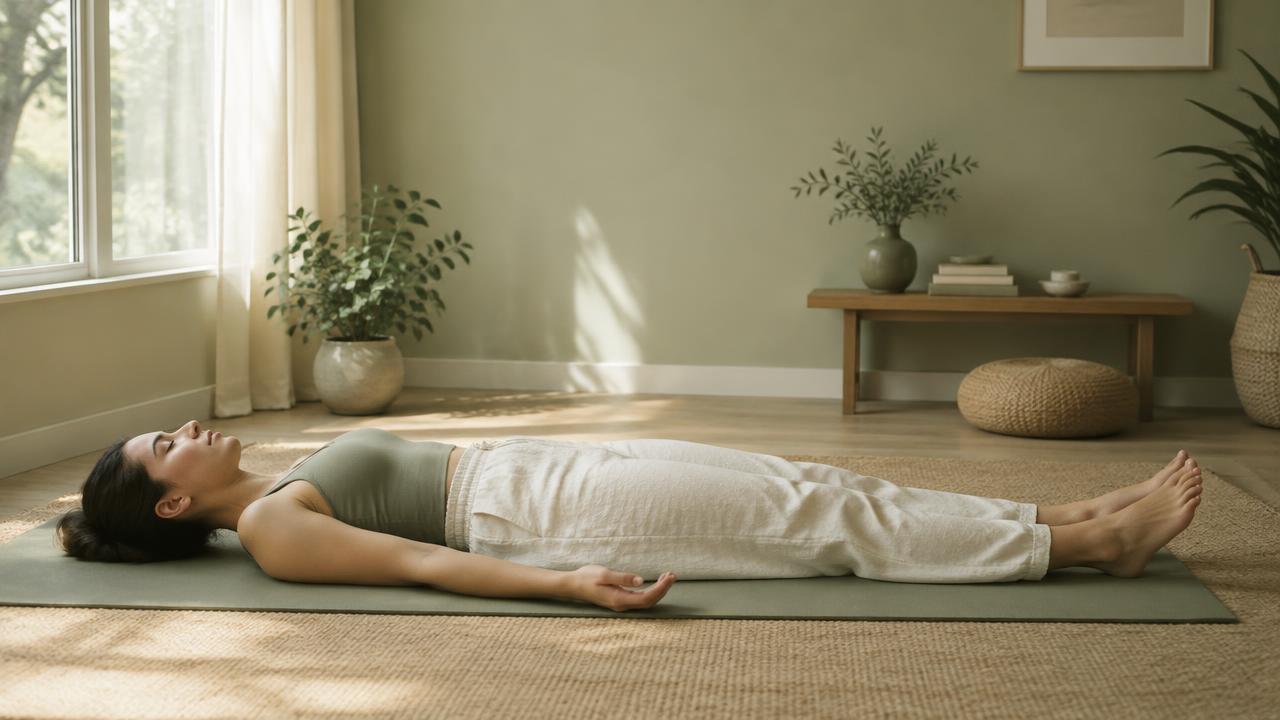
At the end of a busy day, a lot of us only notice our bodies when something hurts. A stiff neck, a headache, a jaw that's been clenched since lunchtime. The tension was there for hours; we just weren't paying attention.
A body scan is a simple way of paying attention. You move your focus slowly through your body, from your feet to your head, noticing what you find. It's one of the core practices in mindfulness-based stress reduction, the eight-week course developed by Jon Kabat-Zinn in the late 1970s, and it's often the first practice people are taught.
What it's for
The point isn't to relax, although many people do. The point is to notice. You might find tightness, warmth, tingling, aching, or nothing much at all. All of that counts.
Over time, regular body scans can help you spot stress building earlier, before it turns into a headache or a sleepless night. Many people also use a short scan to help them fall asleep.
How to do it
Find somewhere you can lie down or sit comfortably for ten to fifteen minutes. A bed, a sofa or the floor with a cushion under your head all work. Close your eyes if you're comfortable doing so, or let your gaze rest on one spot.
- Start with your breath. Take a few slow breaths and notice the rise and fall of your chest or belly. Don't try to change it.
- Move to your feet. Bring your attention to your toes. What can you feel? Warmth, cold, the touch of your socks, pressure against the floor? If you can't feel anything, that's fine. Just notice that.
- Work slowly upwards. Move your attention to the soles of your feet, then your ankles, calves, knees and thighs. Spend around twenty or thirty seconds on each area.
- Continue through the body. Hips, lower back, belly, chest, upper back. Then your hands, wrists, forearms, elbows, upper arms and shoulders.
- Finish with your neck and head. Throat, jaw, mouth, cheeks, eyes, forehead and the top of your head. The jaw and forehead often hold more tension than people expect.
- Take in the whole body. For the last minute, try to notice your body as a whole, breathing.
What to expect
Your mind will wander. You'll be halfway up your left leg and suddenly realise you're thinking about what to cook for tea. That's normal and it's part of the practice. When you notice, gently come back to where you left off.
You may fall asleep, especially if you're lying down in the evening. If you want to stay awake, try sitting up instead.
Some people find that focusing on the body brings up uncomfortable feelings or memories. If that happens, open your eyes, look around the room and take a break. It's fine to skip parts of the body or to keep the scan very short.
Shorter versions
You don't always need fifteen minutes. A two-minute version, moving quickly from feet to head and noticing just one thing in each area, is a good reset in the middle of the day.
Making it a habit
Stanford behaviour scientist BJ Fogg recommends tying new habits to something you already do, using the form "After I ___, I will ___". For a body scan, good anchors include getting into bed, or sitting down on the train home.
Habit researcher Wendy Wood has found that habits form most reliably when they happen in the same place and at the same time. So choose a regular spot and time, and stick to it for a few weeks.
Start tonight
When you get into bed, before you pick up your phone, do a five-minute scan from your toes to the top of your head. Notice one thing in each area. Then see how quickly you fall asleep.