
Box breathing, step by step
A step-by-step guide to box breathing and when to use it.
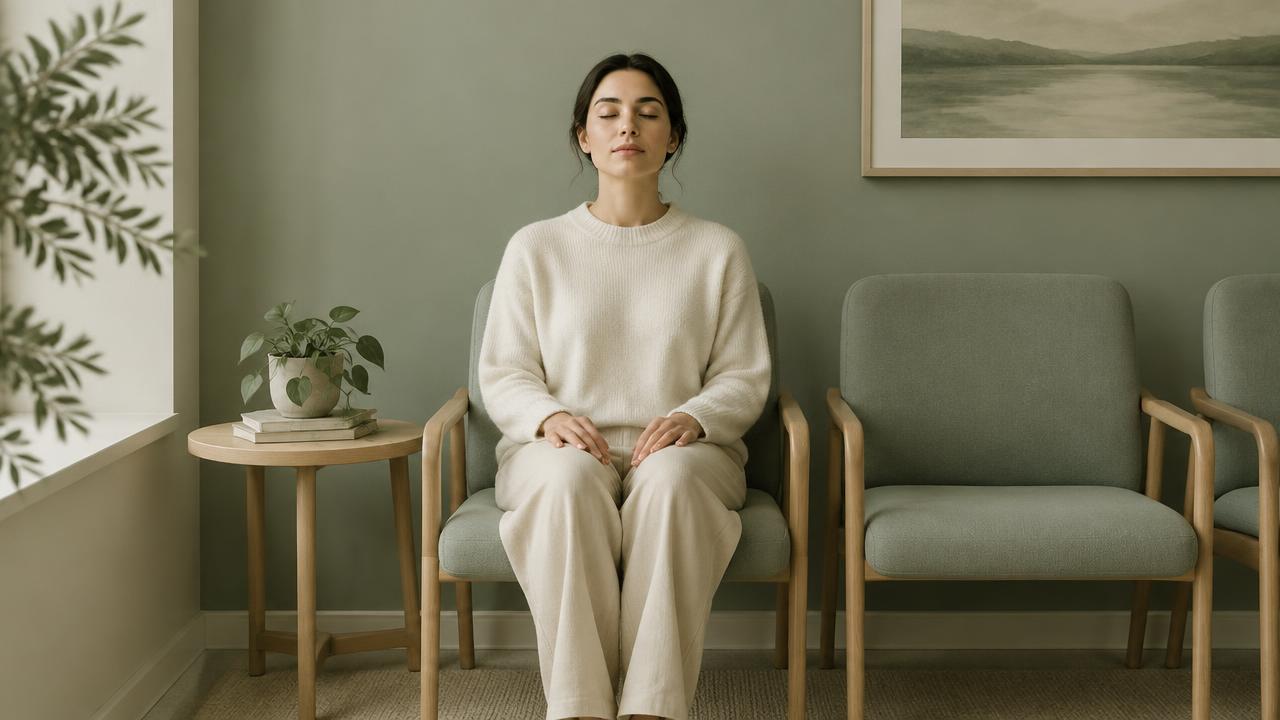
You're sitting in reception before an interview, or waiting for a call you've been dreading, and you can feel your breathing speed up. Your shoulders creep towards your ears. You need something to do with the next two minutes that will actually help.
Box breathing is one of the simplest options. It needs no equipment, nobody can tell you're doing it, and it takes less than a minute to learn.
What it is
Box breathing is breathing in a steady pattern of four equal parts: breathe in, hold, breathe out, hold. Each part lasts the same length, usually a count of four. Picture tracing the four sides of a square, one side for each part, and you have the "box".
It's often linked with the military. Former US Navy SEAL Mark Divine popularised it as a way to stay calm under pressure, and it's now taught to police officers, athletes and healthcare workers.
How to do it
- Sit upright with your feet flat on the floor, or stand if you need to. Let your shoulders drop.
- Breathe out fully through your mouth.
- Breathe in gently through your nose for a count of four.
- Hold your breath for a count of four. Keep it soft, not forced.
- Breathe out slowly through your mouth for a count of four.
- Hold with your lungs empty for a count of four.
- Repeat for four rounds, or for about a minute.
If four feels too long, use three. If it feels easy after a while, you can try five. What matters is keeping each side of the box the same.
Why it helps
When you're anxious, breathing tends to get fast and shallow. Slowing it down, and especially lengthening the out-breath, activates the part of the nervous system that calms the body. Counting gives your mind something to hold on to, so there's less room for spiralling thoughts.
It's worth being honest about the evidence. A 2023 Stanford study compared several breathing techniques with mindfulness meditation over a month. All of them improved mood and lowered anxiety. Box breathing helped, but a technique called cyclic sighing, which uses a double breath in followed by a long breath out, helped a little more. So if box breathing doesn't suit you, that's fine; try a longer out-breath instead. The best technique is the one you'll actually use.
Making it a habit
Breathing techniques are most useful when you've practised them before you need them. If the first time you try box breathing is in the middle of a panic, it's much harder to remember.
Stanford behaviour scientist BJ Fogg suggests building new habits by attaching them to something you already do, using the formula "After I ___, I will ___". For example:
- After I sit down at my desk in the morning, I'll do one minute of box breathing.
- After I park the car, I'll do four rounds before I get out.
- After I put the kettle on, I'll breathe in the box until it boils.
Habit researcher Wendy Wood has found that behaviours become automatic most easily when they happen in the same place and at the same time. A fixed anchor means you don't need to remember. The situation reminds you.
A word of caution
Holding your breath can make some people feel light-headed. If that happens, skip the holds and simply breathe in for four and out for four. If you're pregnant, or have a heart or lung condition, keep the holds short or leave them out, and check with your doctor if you're unsure.
Try it now
Before you go on to anything else, do four rounds. In for four, hold for four, out for four, hold for four. Then pick your anchor for tomorrow.