
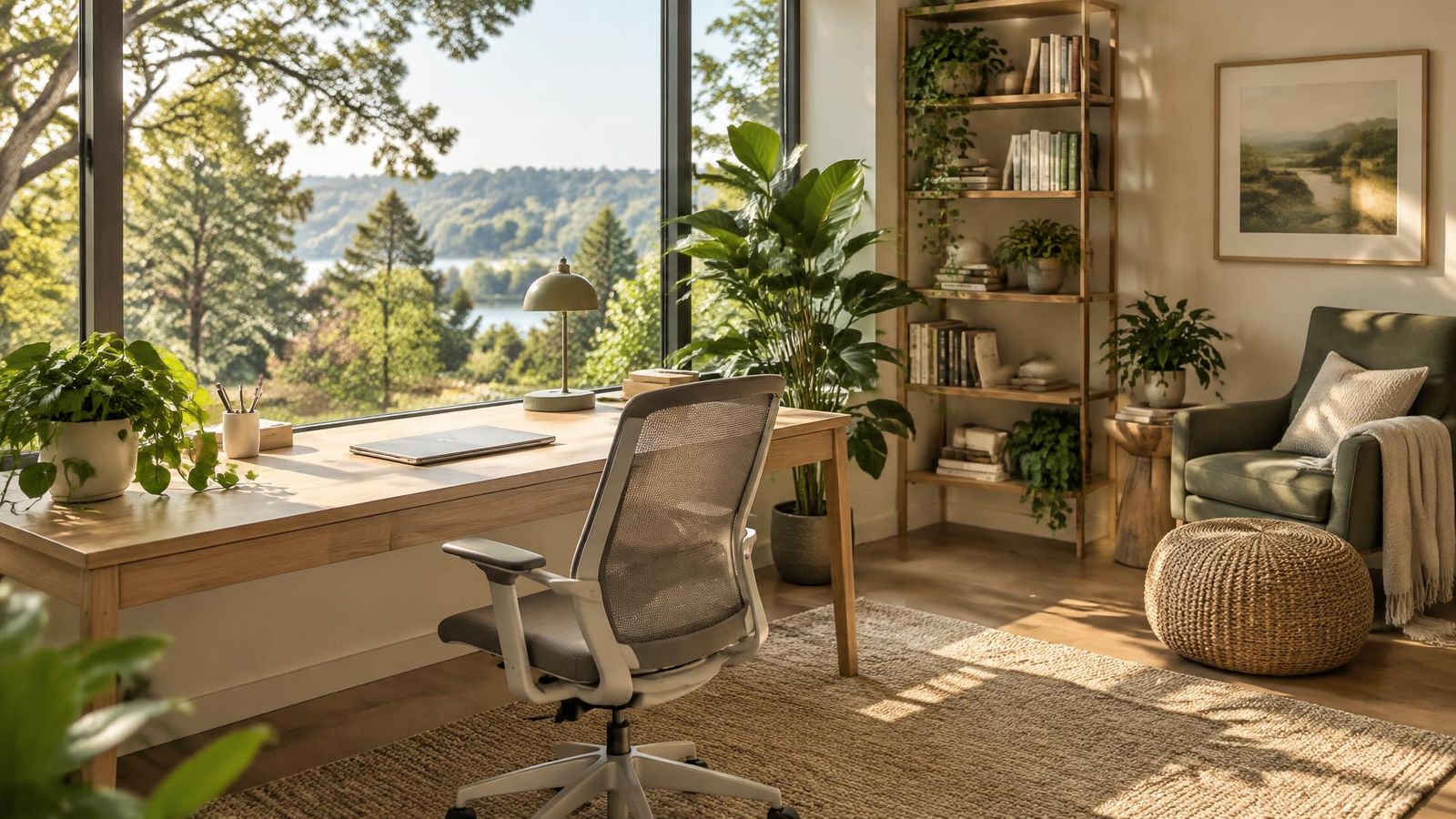
Surroundings: how the workplace shapes wellbeing
Where people work shapes how they feel. Light, noise, temperature, clutter and access to the outdoors all affect energy, focus and mood, often without anyone noticing. The Surroundings area of wellbeing covers the spaces people spend their days in: the office, the home desk, the shop floor, the vehicle and the commute in between.
Small improvements to surroundings are often quick to make and easy to see, which makes this area a good place to show employees that you are listening.
What the Surroundings area covers
- Comfort: temperature, seating, lighting and a workable set-up.
- Calm: noise levels and somewhere quiet to focus or take a break.
- Nature and daylight: natural light, plants and time outdoors.
- Order: tidy, well-kept spaces, including digital ones such as inboxes and shared drives.
- Getting there: how the commute adds to or drains energy.
Signs your surroundings need attention
- People book meeting rooms just to get some quiet.
- Complaints about temperature, light or noise come up repeatedly.
- Home workers are using kitchen tables or sofas as permanent desks.
- Break areas are unused, or there is nowhere to take a proper break.
Practical improvements
Create quiet zones
Even a small area set aside for focused work or a calm break helps in a busy open-plan space.
Let daylight in
Put desks near windows where possible, keep blinds adjustable and encourage people to get outside during the day, especially in the darker months.
Bring in some nature
Plants, views of green space and outdoor seating are simple ways to make a workplace feel calmer.
Support home workers
In the UK, employers must assess workstations for staff who regularly use screens, including at home. Offering equipment such as a proper chair, monitor or keyboard helps people work comfortably.
Look after frontline spaces
For shop, warehouse, care and driving roles, focus on rest areas, clean facilities, somewhere to eat and safe, comfortable conditions.
Tidy the digital workspace
Clear naming for shared files, sensible email habits and fewer unnecessary channels reduce the low-level clutter that wears people down.
Ask before you change
The people who use a space know best what would help. A quick survey or a walk-round with staff often reveals easy wins.
The six areas of employee wellbeing
This guide is part of a six-part series on the areas of life that shape how people feel at work. Each one is useful on its own, but they work best together: pressure in one area usually spills into the others.
- Mind
- Body
- Career
- Money
- Relationships
- Surroundings (you are here)
Measuring Surroundings across your organisation
Good intentions are hard to judge without a baseline. OptiMe Pulse is a short, anonymous check-in by email that asks employees how they are doing across six areas, including Surroundings. There is no app to install and no account to create. You get a report by team and location, and results only appear for groups of five or more people, so no one can be identified. Pricing is flat by organisation size, from £39 a month.
If you want to go further, the full OptiMe app gives every employee their own private plan across the same six areas. Their answers stay private; you only ever see anonymous team trends. Book a 30-minute call to see how it would work for your team.
Frequently asked questions
What is the Surroundings area of wellbeing?
It covers the physical and digital spaces people work in, including comfort, noise, light, access to nature, tidiness and the commute.
How does the work environment affect wellbeing?
Light, noise, temperature and space all influence energy, focus and mood throughout the day.
What can we do for employees who work from home?
Assess their workstation, offer equipment where needed and encourage breaks outdoors during the day.
What is a quick win for surroundings?
Ask staff what bothers them most about their space. Small changes such as a quiet area or better lighting are often easy to make.