
Hygge, Ikigai, Lagom & Beyond: 6 Global Wellbeing Philosophies
Across the world, different cultures have quietly answered the same question for centuries: what does it actually mean to live well? Long before modern positive psychology existed, the Danes had hygge, the Japanese had ikigai, the Swedes had lagom, and southern Africa had ubuntu. These are not lifestyle trends. They are working philosophies, tested over generations and now backed by a growing body of research on happiness, longevity and resilience.
This guide explores six global wellbeing philosophies, the science that supports each one, and a single small practice you can try this week. By the end, you should have a clearer sense of which philosophy resonates most with your life, and how to fold it into your day without overhauling everything.
What is a wellbeing philosophy?
A wellbeing philosophy is a coherent set of values and everyday habits that a culture uses to shape what a good life looks like. Unlike a self-help technique, it is rarely something you "do for ten minutes a day". It is more like a lens, a way of paying attention.
The Nobel laureate Daniel Kahneman drew a useful distinction between the experiencing self (how we feel moment to moment) and the remembering self (the story we tell afterwards). Most wellbeing philosophies work on both at once: they nudge the texture of ordinary moments and the story we end up telling about our lives. Martin Seligman's PERMA model, Positive emotion, Engagement, Relationships, Meaning, Accomplishment, gives us a modern vocabulary for what these traditions have been quietly cultivating all along.
Hygge (Denmark), the art of cosy togetherness
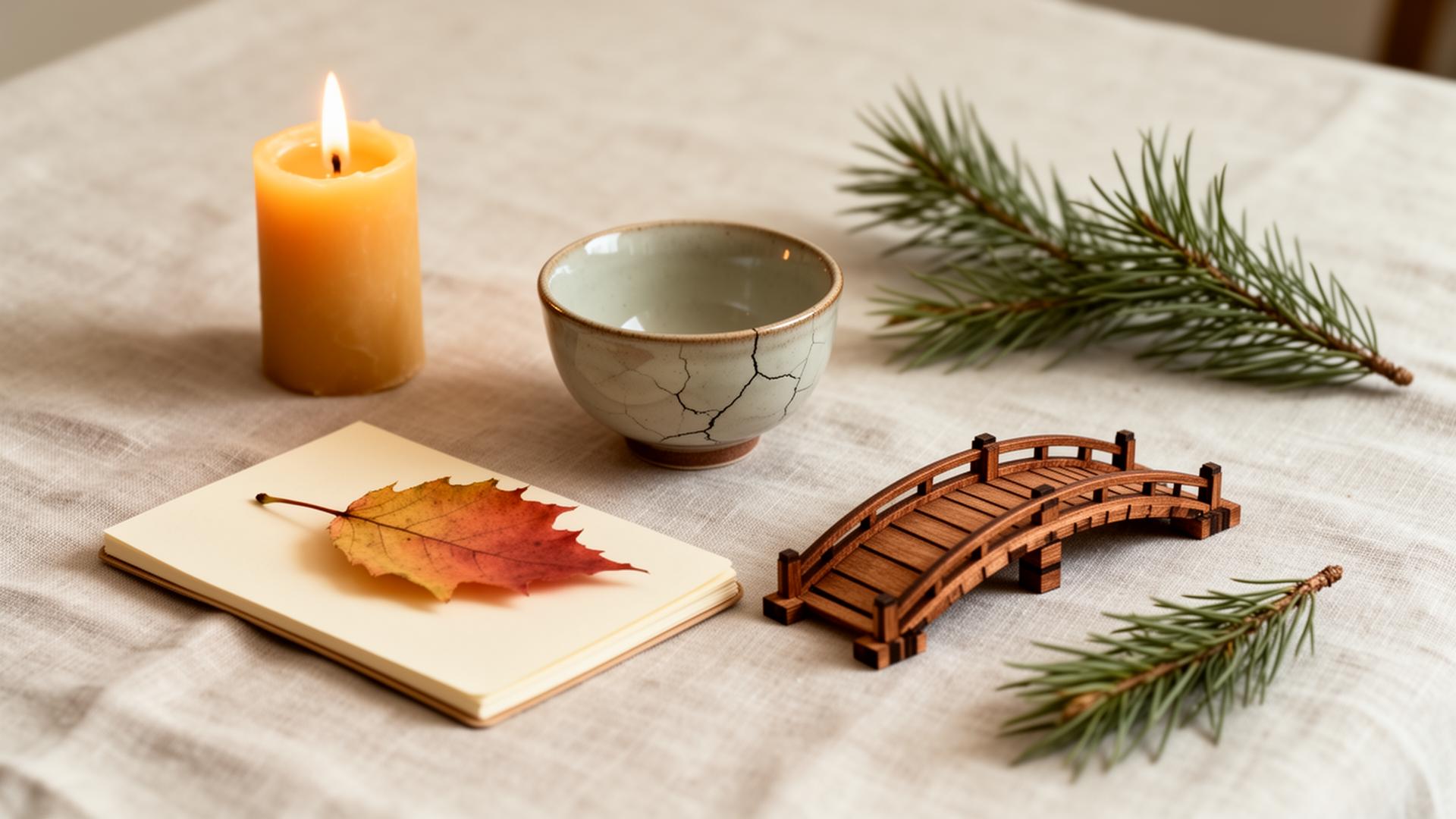
Pronounced "hoo-gah". Hygge is the Danish word for the warm feeling of being content, safe and connected, usually in soft light, with people you like, doing nothing very impressive. Candles, slow meals, a blanket, a board game on a rainy Sunday.
The science
Denmark consistently ranks in the top three on the World Happiness Report. Researchers point to high social trust and strong everyday relationships as a major driver, exactly the conditions hygge cultivates. Decades of work on social connection, including the 85-year Harvard Study of Adult Development, find that the quality of close relationships is the single strongest predictor of long-term wellbeing.
Try this week
Pick one evening. No phones on the table. Warm lighting, a meal you can linger over, and one or two people whose company restores you. That is hygge.
Ikigai (Japan), your reason for getting up
Pronounced "ee-key-guy". Ikigai roughly translates as "a reason for being". In the popular Western version it sits at the intersection of what you love, what you are good at, what the world needs and what you can be paid for. The original Japanese concept is gentler: small daily sources of meaning, not a grand life mission.
The science
The famous Ohsaki Study followed more than 40,000 Japanese adults and found that those who reported having ikigai had significantly lower all-cause mortality over seven years. Sense of purpose has since been linked, in studies on tens of thousands of older adults, to lower rates of cardiovascular events and cognitive decline.
Try this week
Write down one tiny reason you were glad to get up today. Not a goal, a reason. Do this on three mornings. Patterns will appear.
Lagom (Sweden), just the right amount
Pronounced "lah-gom". Lagom means "not too much, not too little, just right". It is the Swedish antidote to hustle culture and excess. Enough work, enough rest, enough cake.
The science
The economist Richard Easterlin showed that once basic needs are met, more income produces sharply diminishing returns in life satisfaction. More recent work on burnout from the World Health Organization frames chronic overwork as an occupational phenomenon with measurable health costs. Lagom is essentially a cultural pre-commitment to enough, and a quiet act of resistance to the always-more pressure that drives burnout.
Try this week
Look at one thing in your week that has crept towards excess, hours worked, scrolling time, commitments in the diary. Ask: what would lagom look like here? Then shave 20% off.
Wabi-Sabi (Japan), the beauty of imperfection
Pronounced "wah-bee sah-bee". Wabi-sabi is the Japanese aesthetic of finding beauty in the imperfect, the impermanent and the incomplete. A chipped bowl. A weathered wooden bench. A face with lines that show a life lived.
The science
Perfectionism is one of the most consistently identified risk factors for anxiety and depression in clinical psychology. Self-compassion research, led by Kristin Neff, shows that treating ourselves with the same kindness we would offer a friend reduces rumination and improves resilience. Wabi-sabi is, in effect, a cultural training ground for self-compassion, it teaches us to accept the cracks, ours and everyone else's.
Try this week
Choose one thing today you would normally judge as "not good enough", a meeting you stumbled through, a meal that didn't come out right, an awkward conversation. Say, out loud or in your head: this was human, and that is enough.
Ubuntu (Southern Africa), I am because we are
Pronounced "oo-boon-too". Ubuntu is a Nguni Bantu philosophy summed up by Archbishop Desmond Tutu as "I am because we are". It teaches that our humanity is bound up in one another, that compassion, generosity and community are not optional extras but the foundation of a good life.
The science
A long line of research, including work by Elizabeth Dunn and Michael Norton at Harvard, shows that spending money or time on others reliably boosts happiness more than spending the same on ourselves. Barbara Fredrickson's broaden-and-build theory describes how everyday acts of warmth widen our thinking and steadily build psychological resources over time.
Try this week
Do one small, unprompted act of kindness for someone in your team, family or neighbourhood. No announcement, no expectation of thanks. Notice how you feel afterwards.
Friluftsliv (Norway), open-air living
Pronounced "free-loofts-leev". Friluftsliv literally means "free-air life". Coined by the playwright Henrik Ibsen in 1859, it describes the simple, almost spiritual benefit of regular time outdoors, in any weather. There is, as the Norwegian saying goes, no bad weather, only bad clothing.
The science
A 2019 study in Scientific Reports, drawing on nearly 20,000 people, found that those spending at least two hours a week in nature reported significantly better health and wellbeing than those spending none. Time outdoors is also strongly linked to better sleep, lower cortisol and improved mood.
Try this week
Take one phone-free walk outside this week, however short. Notice the light, the air on your skin, one sound you would normally miss. That is friluftsliv.
At a glance: the six philosophies
| Philosophy | Origin | Core idea | Best for |
|---|---|---|---|
| Hygge | Denmark | Cosy togetherness | Loneliness, overstimulation |
| Ikigai | Japan | Small daily meaning | Drift, lack of purpose |
| Lagom | Sweden | Just enough | Burnout, overcommitment |
| Wabi-Sabi | Japan | Beauty in imperfection | Perfectionism, self-criticism |
| Ubuntu | Southern Africa | I am because we are | Disconnection, isolation |
| Friluftsliv | Norway | Open-air life | Screen fatigue, low mood |
Which philosophy is yours?
None of these traditions are mutually exclusive. Most flourishing lives quietly borrow from several at once, a little lagom on Monday, some hygge on Friday, friluftsliv on Saturday morning. The point is not to adopt all six. It is to notice which one your life is most hungry for right now.
At OptiMe, our holistic wellbeing assessment gives you a personalised sense of where you are strongest and where a small shift could make the biggest difference. It only takes a few minutes, and the result is a wellbeing profile you can act on this week.
Take the free wellbeing assessment →
Frequently asked questions
What is the most evidence-backed wellbeing philosophy?
Ikigai is among the most rigorously studied, with large cohort studies linking sense of purpose to longevity. But all six map onto well-established findings: social connection (hygge, ubuntu), meaning (ikigai), self-compassion (wabi-sabi), avoiding overwork (lagom) and time in nature (friluftsliv).
Can I combine more than one philosophy?
Absolutely, and most people naturally do. Think of them as lenses rather than rules. A single Saturday can include a friluftsliv walk, a lagom-sized lunch and a hygge-style evening with friends.
How is this different from mindfulness?
Mindfulness is a specific practice of present-moment attention. Wellbeing philosophies are broader, they shape the values and small everyday choices that mindfulness then notices. Many sit comfortably alongside a mindfulness practice.
I'm British, do these still apply?
Yes. The underlying drivers of wellbeing, close relationships, purpose, time outdoors, self-acceptance, balance, are universal. The cultural packaging just gives us a vivid, memorable way to design daily life around them.
Where do I start?
Pick the philosophy that made you nod most as you read. Try the "this week" practice once. If it lands, do it again next week. Lasting wellbeing is built one repeatable habit at a time, not in a single grand resolution.
Want a personalised starting point? Take the free OptiMe wellbeing assessment and get a profile shaped around how you actually live.